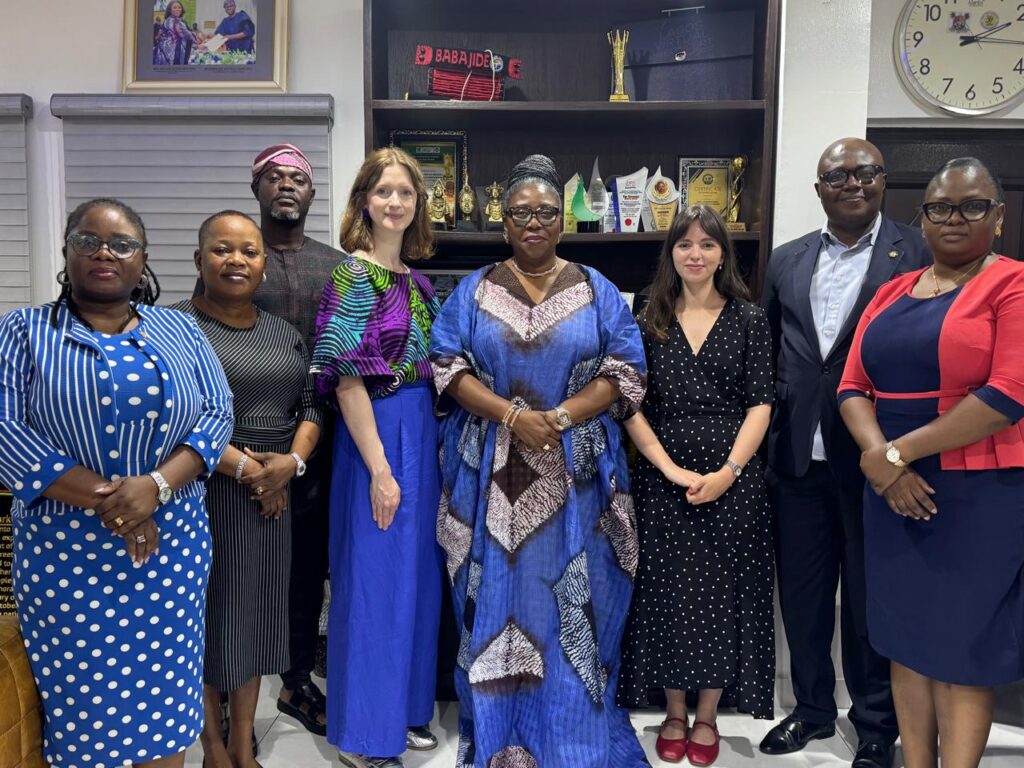
The CDL project with Lagos State Ministry of Tourism, Arts and Culture and Nigeria’s National Commission for Museums and Monuments is a working example of how and why cultural heritage preservation must be a multistakeholder undertaking. Charlotte Griffiths and Liza Bezvershenko went to meet the project partners and explore the complexities and opportunities such a project offers, read on for their reflections.
“Nigeria is a complicated country,” so said a dear Nigerian diaspora friend of the project. But in that complexity comes opportunity for collaboration and cross-fertilisation which can make a micro project have macro impact.
This is the basis of the multilevel and multistakeholder approach at the heart of our CDL project in Ikorodu city, Lagos State where we are working on cultural heritage preservation in close collaboration with local heritage custodians, Ikorodu’s Oba (traditional ruler), the Lagos State Government Ministry for Tourism and Culture (MTAC) and the National Commission for Museums and Monuments (NCMM), with technical support from diaspora and local heritage experts.
Nigeria, a culture and heritage behemoth
Nigeria is a culturally vibrant nation of over 225 million people, home to over 250 ethnic groups and more than 500 languages. Its rich cultural heritage extends far beyond physical artefacts, embracing customs, indigenous practices, diverse architectural styles, and over 365 festivals celebrated annually across the country.
Culture and heritage preservation is a topic which requires action from individual to institutional level, from rural to urban spaces, across generations and over the oceans to the diaspora. It is an arena in which grassroots activities and national frameworks hold equal importance for sustainable preservation and maximum impact on communities.
So, where does one begin to preserve and promote such a rich culture as that of Nigeria?
Where there’s a will, there’s a way
Both Nigeria’s cultural richness and its multilevel governance system are reflected in the diversity of actors involved in management of the cultural sector.
Any federal system requires extensive coordination between levels on shared areas of responsibility, but one might argue that the intangibility of culture is what makes this topic transcend bureaucratic divisions and institutional mandates more than others. Coordinating between federal, state and local level is therefore vital to developing heritage preservation policies and programmes which are sustainable and grounded in the principles of co-creation and co-ownership.
This need to coordinate and collaborate across levels inspires the Heritage Conservation Management Framework which our local and diaspora partners are developing during the current project within a working group under the leadership of the NCMM and MTAC, involving federal, state and local actors.
This working group will not only develop the framework to guide cultural preservation work at the different levels, it will also serve as a space for continuous exchange and innovation. It will even draw inputs from beyond Nigeria thanks to the technical support provided by European, diaspora and other international actors.
Getting all these actors together is no mean feat and it is in great part thanks to the potential of a subdivision of Lagos: Ikorodu.
One festival at a time
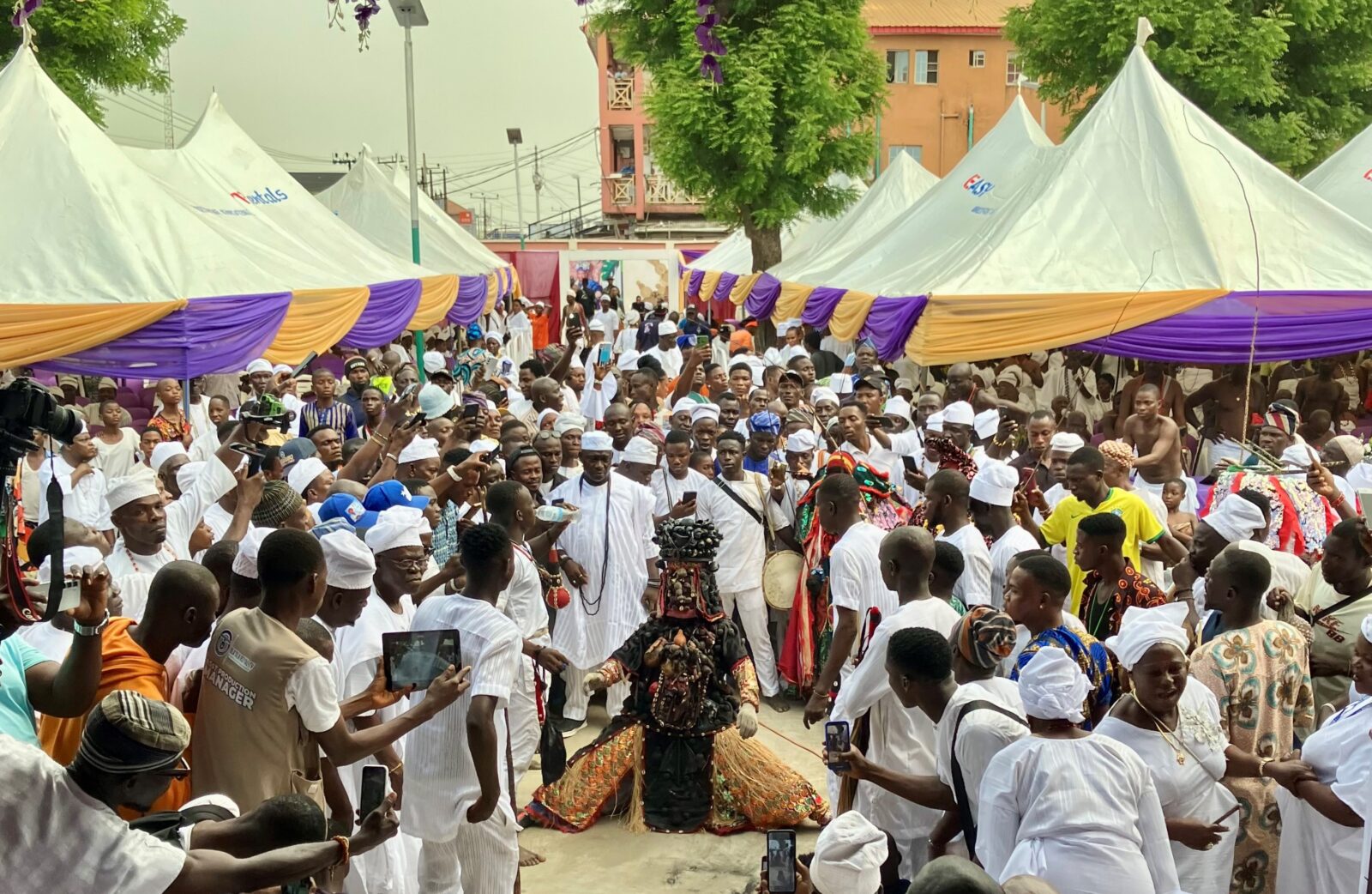
Across the country, communities and leaders preserve and celebrate their culture and heritage as they have for decades. Meanwhile the proliferation of smartphones allows these practices to be shared beyond the local community, bringing new ways of documenting and sharing cultural moments.
Ikorodu Kingdom is currently underrepresented in the Lagos’s culture, heritage and tourism landscape, yet it is home to an incredible variety of festivals and other cultural practices. Seeing the value of preserving its unique cultural heritage, both for its residents and the wider world, the Kingdom of Ikorodu has opened itself as a sandbox for the working group.
During the EUDiF project with MTAC and NCMM, Ikorodu Kingdom has opened its doors to test how such a multilevel and international collaboration can be adopted at local level. In the coming months of the project, heritage custodians in Ikorodu and other districts of Lagos will learn and work to document elements of their cultural heritage which have never been formally documented before, particularly the rich festival and masquerade culture.
Not only will this collaboration serve to immortalise cultural practices so they can be celebrated beyond the city, but it will also be an opportunity for the working group to reflect on how to make such a multilevel cultural heritage project impactful and sustainable.
The heritage-diaspora-tourism dimension
The project in Lagos is a new chapter in EUDiF’s journey on heritage, which started with a case study on youth entrepreneurship and heritage tourism and continued in projects with Moldova’s National Museum of Ethnography and Natural History and Sierra Leone’s Freetown City Council.
What these all share is the firm belief in the value of heritage preservation, which proves time and again to have great importance socially, financially and emotionally, both for local communities and the diasporas who seek to retain or create a connection with home.
“A museum is not a profit-making venture but a legacy for future generations. Our goal is to ensure heritage sustainability while encouraging both local and international tourists to return for our festivals” Toke Benson-Awoyinka, Honourable Commissioner for Tourism, Arts and Culture
Whilst the roles diaspora play in heritage preservation can vary greatly (read about the seven we have identified so far here), what remains constant is a curiosity and commitment that cannot be understated. In the project in Lagos, EUDiF is committed to supporting the project partners in maximising the potential of diaspora engagement for cultural heritage preservation.
Watch this space.
EUDiF would like to thank the partners involved for their unending enthusiasm for this project and for the warm welcome provided to the team on their first visit. In addition to those mentioned in the article, thanks to IGA Nigeria Ltd., Hatch Ideas, Goethe-Institut, and Multichoice DSTV Team.
Article by: Charlotte Griffiths