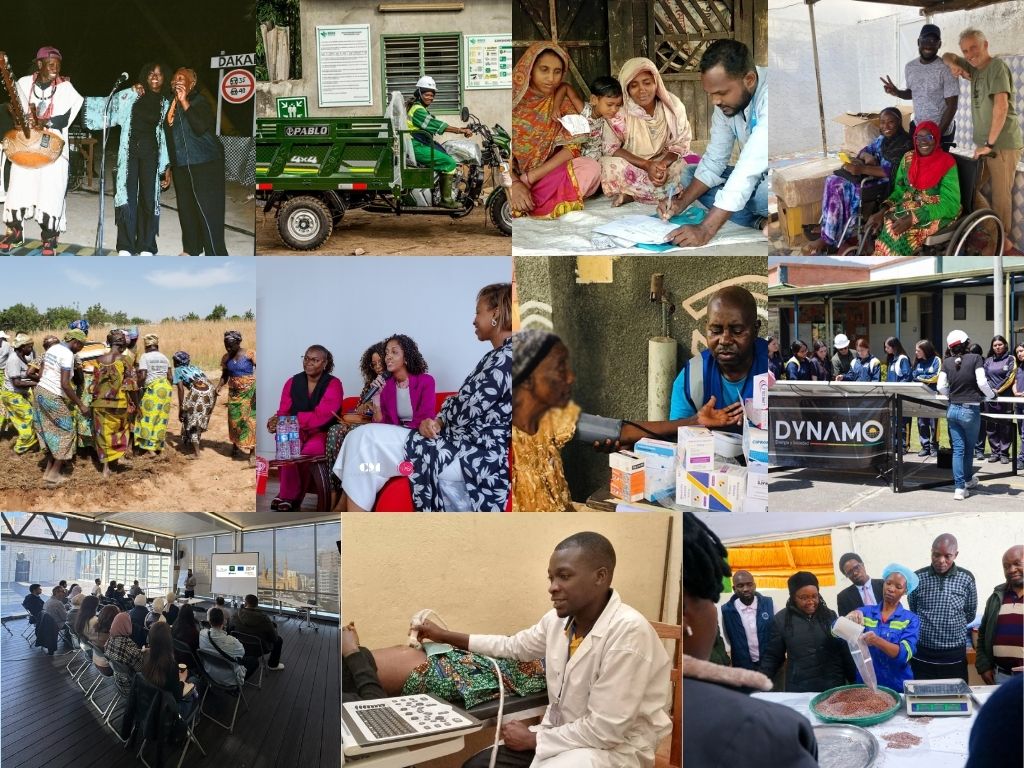
As the Diaspora 4 Development (D4D) Grants portfolio reaches its midpoint, early results are beginning to reveal what diaspora-led development looks like in practice, and the lessons emerging across 11 projects in ten countries.
When the first D4D Grants were launched, the ambition was to support diaspora organisations to turn their knowledge, networks and commitment into concrete development action. Nearly halfway through implementation, a clearer picture is emerging.
From projects to partnerships
Across 11 projects covering health, climate, entrepreneurship, digital skills and cultural heritage, the portfolio has already reached almost 15,000 direct beneficiaries. Yet the numbers tell only part of the story.
What stands out is how diaspora organisations operate. Rather than creating parallel systems, they work through local hospitals, schools, cooperatives and civil society organisations, combining international expertise with locally led implementation. In doing so, they are helping localise development cooperation while strengthening the institutions that remain long after projects end.
In Burundi, diaspora medical specialists worked alongside local hospitals and health authorities to strengthen prenatal healthcare services, contributing to a 150% increase in prenatal consultations. Healthcare providers, community organisations and technology partners in Cameroon are jointly expanding access to telehealth in rural communities. In Cabo Verde, 50 women entrepreneurs are developing their businesses through partnerships with the public employment institute and diaspora mentors, while in Lebanon, training centres, employers and diaspora professionals are working together to connect 30 young people with digital employment opportunities.
Across Benin, Bangladesh, Colombia Togo and Zimbabwe, projects are bringing together local authorities, cooperatives, farmers and schools to promote renewable energy, climate-resilient agriculture and circular economy solutions. For example, in Benin, more than 154 tonnes of waste have already been collected, while women farmers in Togo have increased vegetable production by 73%. In Senegal, one project is improving access to rehabilitation services for children with disabilities, as another is bringing together cultural institutions, universities and diaspora artists to preserve and reimagine African heritage for new generations.
The diaspora difference
Diaspora engagement is one of the portfolio’s defining strengths. Since implementation began, more than 105 diaspora members have contributed as trainers, technical experts, mentors, fundraisers and strategic advisers. Their contribution extends beyond project delivery. Across the portfolio, diaspora organisations are demonstrating their ability to convene diverse actors, transfer knowledge across borders and strengthen local institutions, qualities that make them valuable partners in effective and sustainable development.
Accompanying implementation
Implementation has not been without challenges. Many organisations are managing EU-funded grants for the first time, balancing technical implementation with demanding financial and reporting requirements, often through small teams. This experience has reinforced the importance of accompanying funding with capacity development. Alongside financial support, EUDiF provides tailored training, coaching and peer learning to help strengthen organisational capacities.
Looking ahead
With several projects entering their final implementation phase over the coming months, the portfolio is already showing that relatively modest grants can generate wider change when they combine local ownership, diaspora expertise and strong partnerships. The coming months will reveal how these early results translate into lasting outcomes, but the evidence so far proves that diaspora organisations are well placed to bridge local priorities with international knowledge, networks and resources.
EUDiF extends its sincere thanks to the 11 diaspora organisations and their local partners who made these early results possible: Aloghar Support Group (ASG)-Germany e.V. and ANTAR; Avenir Écoles Cap-Vert (AECV) and the Instituto de Emprego e Formação Profissional’s (IEFP), Avenir des Jeunes Filles de Dapaong (AJFD) and the Association pour la Promotion du Développement Intégral de la Femme (APDIF); Alissar France and Alissar Lebanon; Future of Hope vzw (FoH) and the local Future of Hope Foundation; Gbobètô France and Gbobètô Benin; Kunstrial e.V. and Dynamo; Mandji and the Institut Fondamental d’Afrique Noire (IFAN); Mapubi e.V. and Health and Research Organisation Cameroon (HERO); SenHandiCare (SHC) and Handicap Ca Kanam; and Microprojects Foundation and IBAZA-Imfura.