In the spirit of International Day of Education, Diana Hincu explores how scientific diasporas and young people are co-creating the future education.
If a Guatemalan scientist in Norway mentors a young researcher back home, where does the education system really live? It lives wherever knowledge flows.
For decades, diaspora engagement in education and research was framed as philanthropy or return. Today, it functions more like infrastructure — distributed, ambient and quietly powerful. In the age of digitalisation, open science and AI, diasporas connect systems and they can reprogram them. Imagine a scientist sharing insights with colleagues and students across the globe, bringing the best of their experience back to the communities they care about. With online labs, virtual mentoring and mobile science platforms, diaspora can now reach thousands without leaving their desks.
In the spirit of International Day of Education and its 2026 focus on youth, we explore how scientific diasporas supports education reform and knowledge circulation, as well channelling the energy and creativity of young people to co-create the future of learning and research.
What roles do they play?
The question is no longer how and where countries can mobilize their scientific diasporas; it is whether education and research systems are ready to operate as openly, collaboratively and flexibly as their diasporas already do. Working closely with academic professionals and including young diaspora researchers, EUDiF has learned that they can play active roles in co-developing knowledge systems that transcend borders and harness technology in transformative ways. What unites these roles is not geography, but access: access to tools, networks, norms and ideas.
Knowledge brokers
Thanks to their “outside-insider” perspective, diaspora members often introduce cutting-edge solutions, deepen research, and stimulate local innovation ecosystems, facilitating the flow of scientific knowledge. Our project on Guatemala’s scientific diaspora highlights the value of these exchanges: supporting policy formulation, enabling peer learning with Costa Rica, designing digital engagement mechanisms and consulting diaspora in Europe to identify concrete ways to contribute.
Tech catalysts
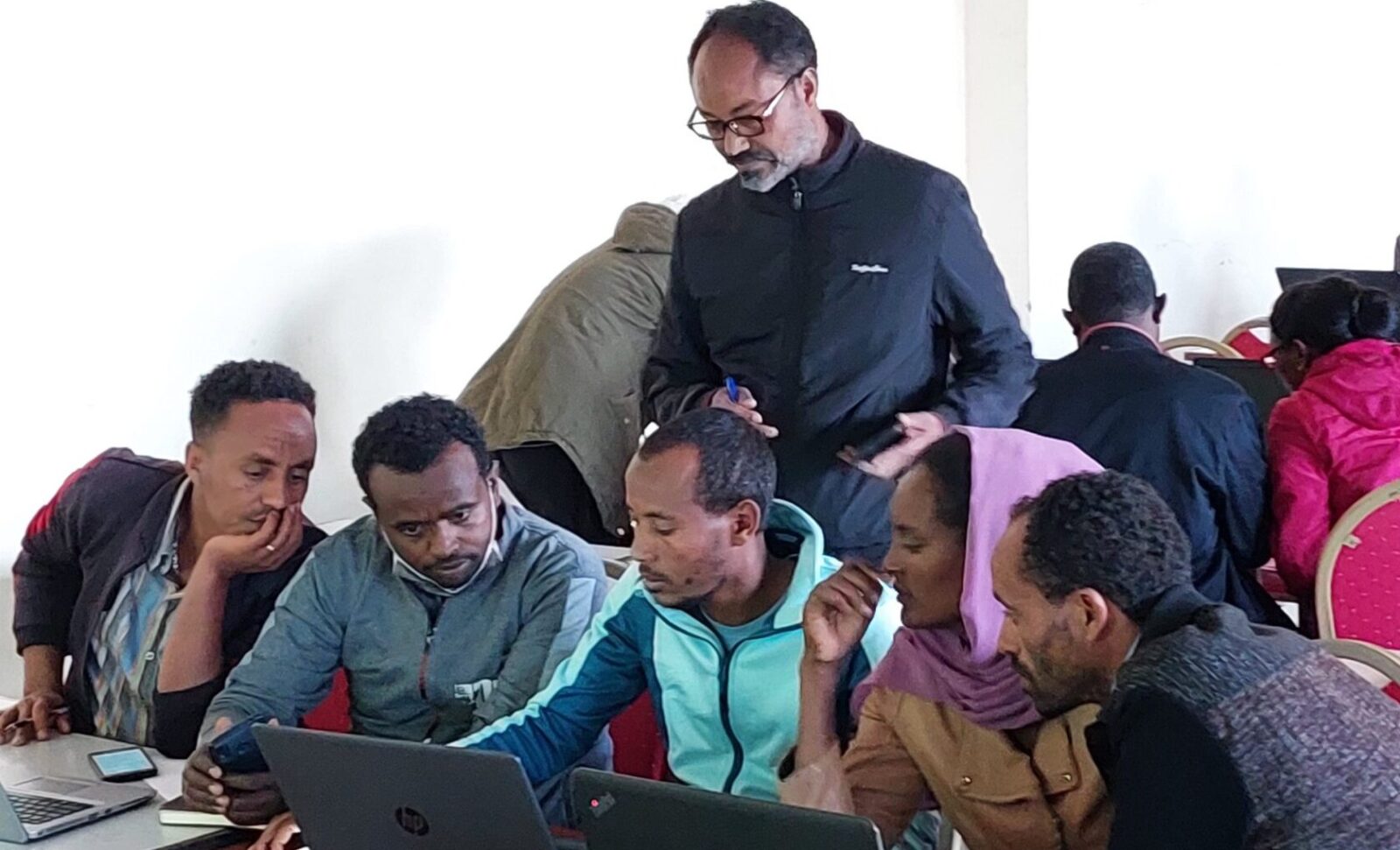
Exposed to new technologies and teaching methods, diaspora members can provide evidence-based advice to governments on science and sectoral development. In our actions in Ethiopia and Philippines, they introduced innovative digital solutions in higher education. For example, a group of Ethiopian diasporas developed a first digital curriculum in agrifood business for a university in Dessie, enabling youth to work in multidisciplinary teams on local projects. The top teams from the Ethiopian students who tested the new curriculum received extra funding and were nominated to participate in the World Youth Innovation Lab in 2026, boosting their global competitiveness and the quality of education.
Science diplomats
The diaspora can advance national scientific interests abroad, foster international research networks and support science-informed policy dialogue. We were inspired by GIZ’s spotlight publication on Ukraine, which shares 34 stories of how global expertise continues to support Ukrainian scientific communities during war, reflecting on reconstruction opportunities, tools for scientific diplomacy and collaboration with foreign research and business institutions through the Ukrainian Science Diaspora initiative.
Bridge mentors
Diaspora professionals can serve as connectors, expanding research networks, offering training to early-career researchers, supervising students, and strengthening local scientific skills. In Moldova, with the support of EUDiF, three women from the diaspora blazed a new trail by mobilizing over 100 highly skilled Moldovans based in Europe through creating a diaspora co-working hub for higher education. Their targeted survey revealed that 86% of diaspora professionals from Moldova are eager to engage but stress the need for institutional mechanisms to support mentorship and knowledge transfer. Undeterred, these diaspora experts kept the momentum alive, launching new initiatives beyond this project, such as the EDUHack 2025—Moldova’s first academic hackathon dedicated to higher-education landscape.
Citizen science accelerators
Diaspora networks can make science more accessible by promoting open data, preprints, collaborative platforms and youth-led labs that highlight the impact of citizen science. A striking example is EUDiF’s initiative in Mexico, where diaspora academics acted as catalysts to transfer knowledge between Mexico and Europe. Through RGMX-UK, part of the Mexican Talent Network, they co-created a toolkit on climate change and the circular economy, fostering transparent, cross-border and actionable knowledge exchange for their citizens back home.
Youth multipliers
We often see diaspora youth as the “next generation”, but they can act as current system hackers, mixing identity, activism, technology and research with creativity. Student-led initiatives, AI clubs and cross-border research collectives reveal their bold ideas and promote youth-led research internationally. For instance, at EUDiF, we provide a space for co-creation and youth-led research, where our diaspora interns explore topics like identity, development, globalization, citizenship, diaspora representation and much more. Their insights, featured in our youth alumni magazine, offer a fresh perspective on the future of education, learning, and diaspora engagement.
Ideas and knowledge don’t need visas
These roles are by no means exhaustive, and challenges remain — mismatched expectations, limited funding and absorption capacity — but we can start with recognition and empowerment. Acknowledging the value of scientific diasporas, the EU offers mobility programs, awareness mechanisms and science awards to promote the circulation of ideas and knowledge for scientists worldwide, including for youth. EURAXESS provides guidance on building sustainable scientific diaspora networks to sustain this purpose. Through EUDiF, we test new engagement models and recognition schemes that inspire knowledge transfer with scientific diasporas and amplify diaspora youth agency — helping make education systems more open, inclusive and accessible to learners everywhere. Ideas and knowledge don’t need visas for learning and discovery.