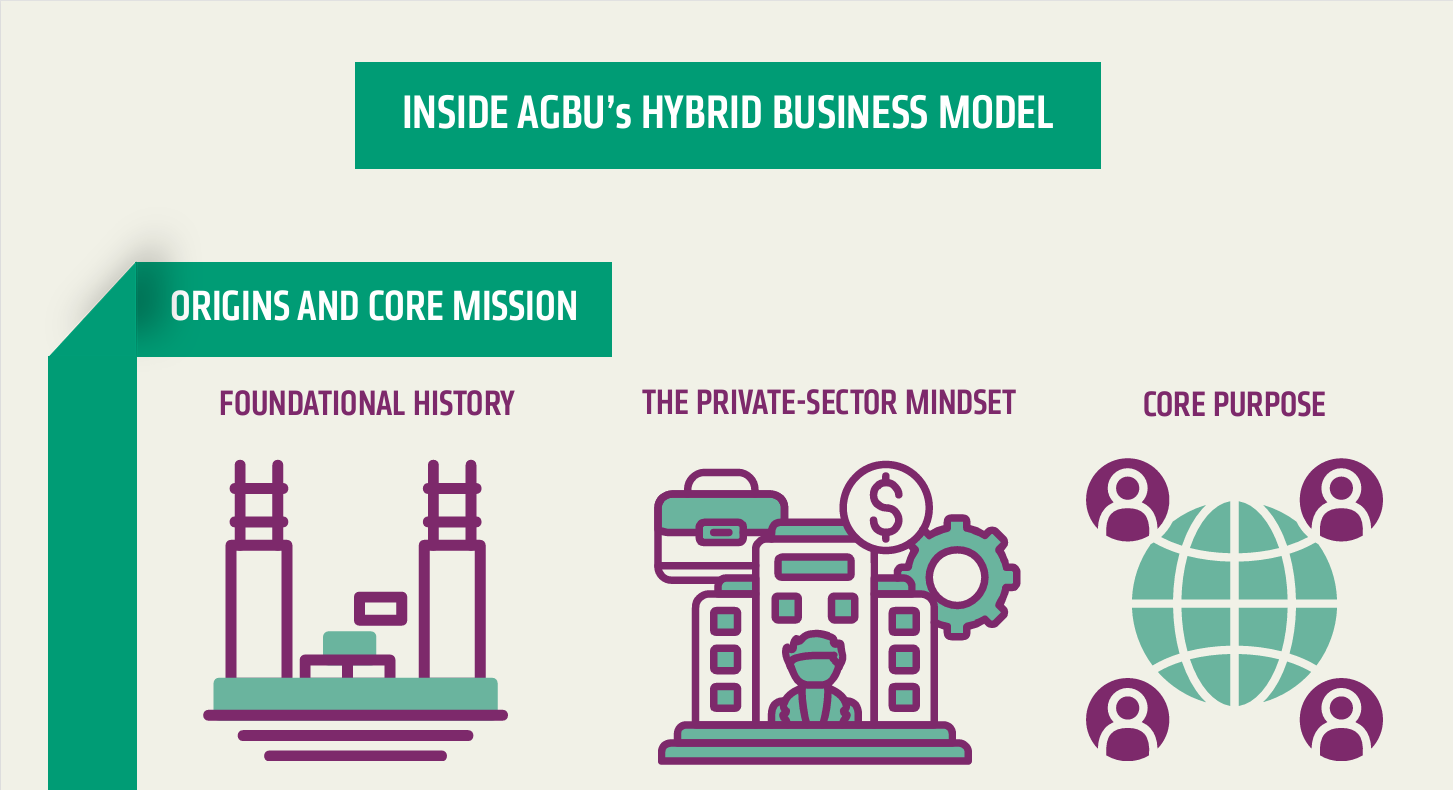
In April, upon the publication of our research “Business models of diaspora organisations”, AGBU Europe told the story of how their hybrid business model has allowed the organisation to grow and adapt for 120 years. Today, we return to their model to inspire diaspora organisations thinking about their own futures in the face of a challenging funding landscape.
When the Armenian General Benevolent Union (AGBU) was founded in Cairo in 1906, it introduced something diaspora organisations rarely had at the time: a private-sector mindset paired with a long-term, collective vision for the Armenian people worldwide. More than a century later, that same instinct for durability shapes how AGBU funds its work across four pillars: education, culture, humanitarian assistance and socio-economic development in Armenia and across diaspora communities in Europe, the US and beyond.
At the EUDiF webinar, Funding the future: Inside sustainable diaspora organisations, AGBU’s Learn to Earn Armenia Program (LEAP) Manager Astine Badeyan shared how the AGBU answers to the question every diaspora organisation eventually faces: how do you build a funding model that survives beyond any single grant, campaign and/or crisis? The key: do not rely on one model, combine several.
Here is a closer look at AGBU’s hybrid business model. Test yourself along the way with the short quizzes below then explore the full picture in the infographic linked at the end.
What makes a hybrid model “hybrid”?
“If I were to describe AGBU’s model in one sentence, I would say: we are a hybrid organisation that combines philanthropy, investment and partnerships to sustain long-term impact.”
– Astine Badeyan, Manager, LEAP, AGBU
In practice, AGBU’s model sits across three overlapping dimensions: endowment-based sustainability (income generated and preserved through long-term funds), community-driven fundraising (structured and ad-hoc campaigns run through AGBU’s diaspora network) and, increasingly, partnership-based and impact-oriented approaches (working with the private sector and exploring new investment and advisory income). No single one of these defines AGBU’s model on its own as it is the combination and the balance between them that makes it hybrid.
Quick quiz 1
A diaspora organisation finances its programmes partly through a growing endowment, partly through long-term partnerships with the private sector and partly through fundraising initiatives. Which funding model does this best describe?
A. Membership-based model
A membership-based model relies primarily on dues and contributions from a defined membership base. This is not AGBU’s core funding model.
B. Hybrid model
Correct! This combination is exactly what makes a model hybrid. AGBU draws on endowment funds for both emerging priorities (general) and specific purposes (restricted); engages the private sector not only for funding but for expertise, tools, and innovation; and runs structured and ad-hoc fundraising alongside its investment activity.
C. Umbrella network model
An umbrella network model centres on redistributing funds across a network of affiliated organisations. AGBU is exploring newer avenues instead such as social impact investment and monetising its expertise through advisory services and training.
Inside AGBU’s income streams
Diversification is the throughline of everything AGBU does: it is not dependent on a single source of funding.
- Endowments – split between general funds the Board can allocate at its discretion toward emerging priorities, and restricted endowments earmarked for specific purposes such as scholarships, equipment, or targeted programmes.
- Fundraising – structured and ongoing for core programmes, plus ad-hoc ones in response to humanitarian crises or new initiatives.
- Investment – AGBU works with portfolio managers and investment specialists, but takes a conservative approach that prioritises stability and long-term capital preservation over high-risk returns.
- Partnerships – a growing stream of collaboration with the private sector, increasingly valued not just for funding but for expertise, tools, and innovation.
Together, these give AGBU something many diaspora organisations struggle to build: the ability to plan long-term and invest in impact that takes years, not months, to materialise.
Quick quiz 2
AGBU’s board has full discretion to allocate some endowment funds toward emerging priorities, while other endowment funds are earmarked only for things like scholarships, equipment or specific programmes. What are these two types of endowments called?
A. Ad-hoc and structured funds
“Ad hoc” and “structured” actually describe AGBU’s two fundraising approaches – crisis-response campaigns versus ongoing campaigns for core programmes – not its endowments.
Public and private trusts
This is not a distinction AGBU uses. Its endowment funds are categorised by how they may be allocated (general vs. restricted), not by public or private status.
C. General and restricted endowments
Correct! General endowments give the Board discretion to respond to emerging priorities, while restricted endowments are designated for specific purposes such as scholarships, equipment, or targeted programmes. Together they give AGBU both flexibility and long-term stability.
The power of people/network
AGBU’s hybrid model is not only about where income comes from, but it is also about what its global network can mobilise beyond funding. With chapters, members, volunteers, Young Professionals network, mentors, donors and partners across Europe, North America and beyond, AGBU functions less like a single institution and more like an ecosystem.
Through its mentorship programmes, diaspora professionals support beneficiaries in Armenia directly. Its Young Professionals network drives fundraising and community engagement. Partnerships increasingly bring skills, technology and strategic input, not just funds. Astine pointed to the rapid, multi-channel mobilisation of the diaspora during the 2020 war as one of the clearest examples of this network in action.
Quick quiz 3
Beyond financial contributions, what does AGBU’s global network of chapters, mentors, donors and young professionals mobilise?
A. People, knowledge, and trust
Correct! Through mentorship programs, diaspora professionals support beneficiaries in Armenia directly; the Young Professionals network drives fundraising and community engagement; and partnerships increasingly bring skills, technology, and strategic input. The diaspora’s rapid, multi-channel mobilisation during the 2020 war is a clear example of this network in action.
B. Nothing beyond donations
AGBU’s leadership specifically highlights that the network’s value goes well beyond fundraising.
C. Only government grants
Government grants are not a feature AGBU highlighted here.The emphasis is on people (mentors, professionals, donors) and the knowledge and trust they mobilise.
Where the model is headed
AGBU’s hybrid model keeps evolving. What began as a primarily philanthropic approach has shifted toward deeper partnership with the private sector bringing in expertise and new ways of thinking, not just funding, alongside closer cooperation with governments, grassroots organisations and international partners. Programmes like LEAP extend this logic into socio-economic development, focusing on employability and links to the labour market, on the premise that strengthening livelihoods is part of sustaining the organisation itself. Looking ahead, AGBU is exploring social impact investment, new fundraising models and the monetisation of its own expertise through services such as training and advisory work.
“There is no single model that guarantees sustainability for diaspora organisations. But what AGBU’s experience shows is that sustainability comes from balance between financial stability and flexibility, between global networks and local impact, and between mission and innovation.”
– Astine Badeyan, Manager, LEAP, AGBU
See the full picture
Want to see how all of these pieces fit together at a glance? Explore the AGBU hybrid business model infographic, now available in our Library.