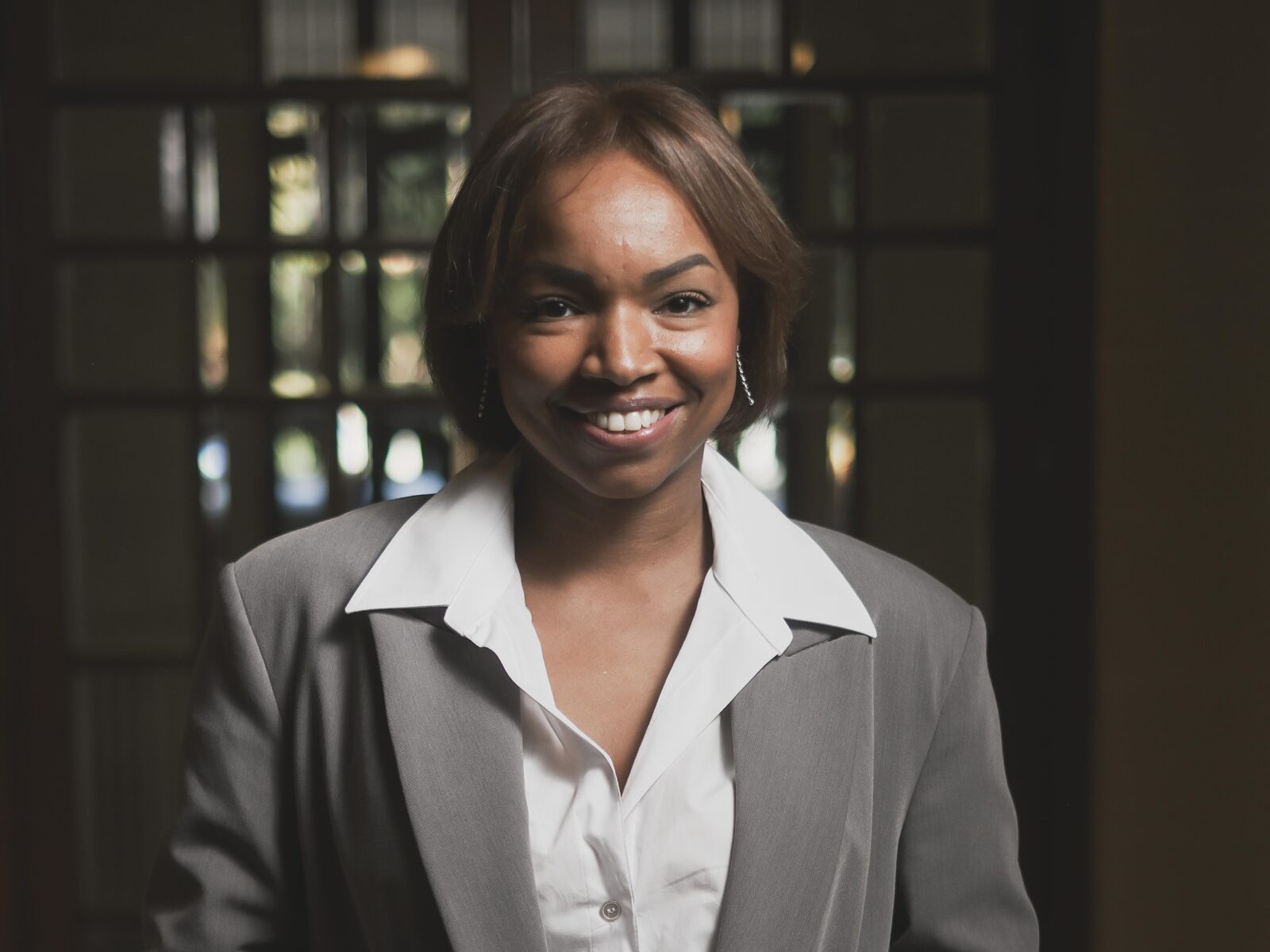
Speaking to Grants officer Acacia Polatian, one of the diaspora entrepreneurs actively involved in the project implemented by Avenir Ecoles Cap-Vert, in partnership with the Institute of Employment and Vocational Training (IEFP) in Cape Verde, shares her work to empower women and girls on the island of Santiago.
Born in Portugal, Solange Lopes migrated at a very young age to France, where she settled with her family in Cannes. It was there that she grew up, studied and launched her professional career. Trained in law and management, Solange founded her first insurance brokerage company early in her career in France, and, in 2019, she extended this experience to Cape Verde by creating a francophone call centre initially designed to support companies in France, before expanding it into a multi-sector service and training platform.
In 2023, she went on to establish a business advisory firm and launch the first coworking space in Praia, now a recognised hub for entrepreneurship. She currently lives and works between France and Cape Verde. Her story reflects a broader dynamic at the heart of the EmpowerHER project: how diaspora engagement, when anchored in structure and long-term vision, can support women’s economic empowerment and contribute to sustainable local development.
Acacia: As an entrepreneur from the diaspora, what motivated your return to Cape Verde after years abroad? How did that transition influence your entrepreneurial journey?
Solange: My decision to build something in Cape Verde did not happen overnight; it grew naturally from my entrepreneurial path in France. Twelve years ago, I founded my first company, an insurance brokerage, from scratch. Over time, as the company grew and I built a team, I moved into the role of manager and business leader.
That experience gave me a strong understanding of organisation, processes, and team management. At a certain stage, I began reflecting on how to scale the business. Like many companies in France, we relied on call centres for customer support and sales. At the same time, I had always wanted to do something meaningful in Cape Verde. Creating a call centre there became an obvious link between these two ambitions. Initially, it was designed as a support function for my activity in France.
The diaspora dimension was central to this process. Living in France while creating a company in Cape Verde required trust and continuity. I involved collaborators of Cape Verdean origin from my French team, who supported recruitment and training on the ground. They played a key role in transferring skills and ensuring quality, and there was a strong sense of pride in contributing to economic activity in their country of origin using experience gained abroad.
A: Did you ever feel challenged in your role as a member of the diaspora working in Cape Verde?
S: Yes, very much so. You can sometimes be perceived as an outsider, even in your own country. I never expected recognition or praise for creating businesses or jobs, and I was prepared for challenges. What helped me was my prior experience as an entrepreneur in France. I had already faced criticism, scepticism, and resistance to change. In Cape Verde, these challenges were sometimes compounded by questions of identity, with the implicit idea that you are not entirely from here. I learned to move beyond that by staying grounded. My connection to Cape Verde is rooted in my family and the values they passed on to me. I never position myself as someone who knows better, but as someone who shares experience, listens, and continues to learn from local realities.
A: What motivated you to join the EmpowHER project?
S: My background has always been very business-focused, and I was not initially involved in civil society initiatives. My engagement came much later, when I was recently invited to contribute to several social programmes, and what convinced me to join EmpowerHER was its structure. The project has clear objectives and focuses on long-term accompaniment rather than isolated training sessions. Supporting women to structure viable businesses that can generate sustainable income aligns closely with my values. Motivation alone is not enough; real impact comes from consistent support, skills development, and follow-up.
The fact that the project also reaches younger girls through schools is particularly important. Early exposure matters. Many girls face vulnerability at a very young age, and initiatives like this help open horizons, build confidence, and show that alternative paths are possible.
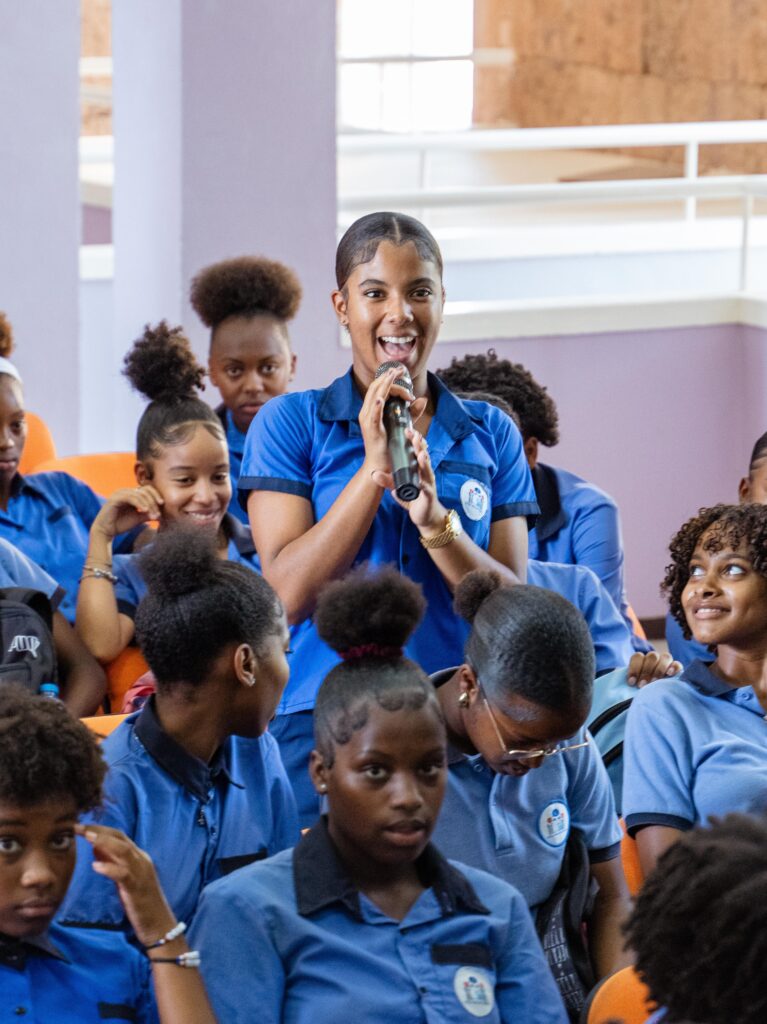
A: You were particularly involved in the flagship Women Empowerment event that took place in November 2025. Was there a conversation or moment that particularly moved you or reminded you why initiatives like this one matter?
S: The event was emotionally powerful. Women from very different backgrounds shared their entrepreneurial journeys, including women based in Cape Verde and others from the diaspora who had returned. Together, we challenged the idea that opportunities only exist abroad.
What struck me most was seeing women who were hesitating to take a decisive step forward. They revealed how early some young women are confronted with responsibility, and how much resilience they already carry. Some were unsure whether to start a business or apply to the programme and receive more training support. Despite difficult circumstances, their determination to continue learning, working, and planning for the future was striking.
Hearing real experiences helped them move past doubt and commit to the training and mentoring process. Witnessing women transition from informal activities towards more structured projects was particularly meaningful. These moments reinforced my belief that empowerment begins with listening and very practical guidance.
A: In a few weeks, you will begin mentoring women who have completed training in agri-food processing, entrepreneurship, and financial literacy through the project. In your view, how can mentorship transform the trajectory of a woman entrepreneur in Cape Verde?
S: Mentorship is essential, but only if it is done in the right way. The mentor must be accessible and relatable. If the gap feels too large, mentorship can become discouraging rather than empowering.
The real value of mentorship lies in helping women move from theory to action. It bridges the gap between training and real-life entrepreneurship and gives women the confidence to apply what they have learned.
A: What impact do you hope this project will have in the longer term?
S: I hope the project will help women, and the younger generations observing them, realise that opportunities exist in their own country. Supporting the transition from informal to formal businesses is key. Once a business is formalised, new doors open, including access to finance, social protection, and growth opportunities.
Opportunities are not always immediately visible, but they can be created. When women connect through training, mentoring, and networks, they are no longer isolated; they become part of an ecosystem.
A: What message would you share with members of the diaspora who want to contribute and where do you see the greatest potential for the diaspora to contribute to this journey of empowerment?
S: Preparation and planning – without romanticism. Preparation and planning are essential, without romanticising the idea of return or investment. Any project should be approached with the same seriousness as anywhere else: conducting market studies, understanding the local ecosystem, and being ready to invest time in skills transfer and training.
Diaspora entrepreneurs have a meaningful role to play because they combine external experience with local realities. When this contribution is made with humility, structure, and a long-term vision, it can be a powerful driver of women’s empowerment and sustainable development.