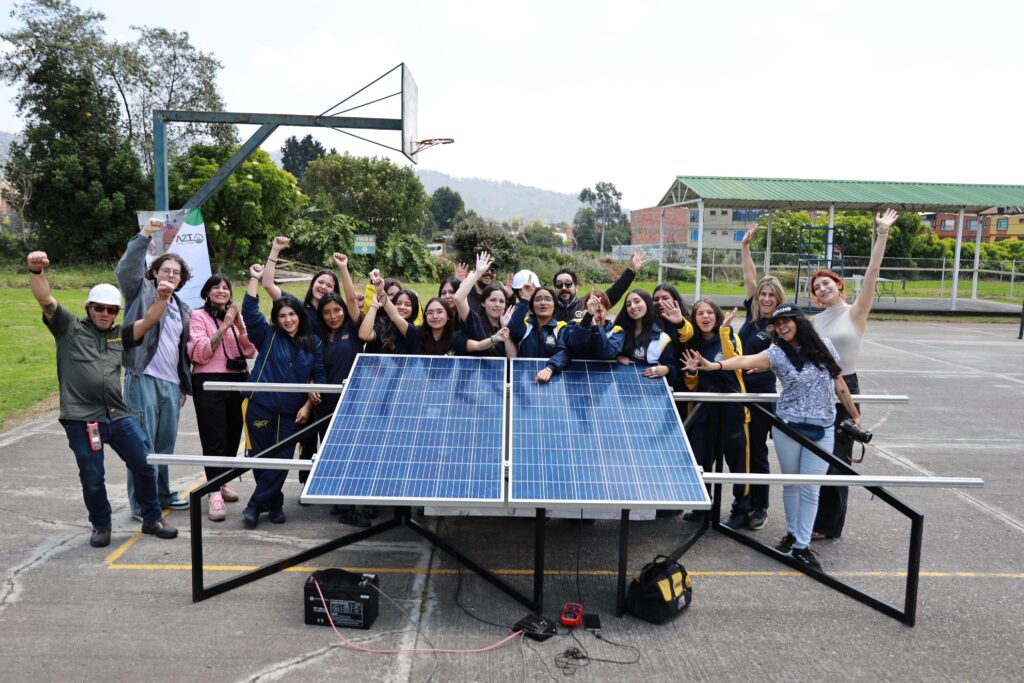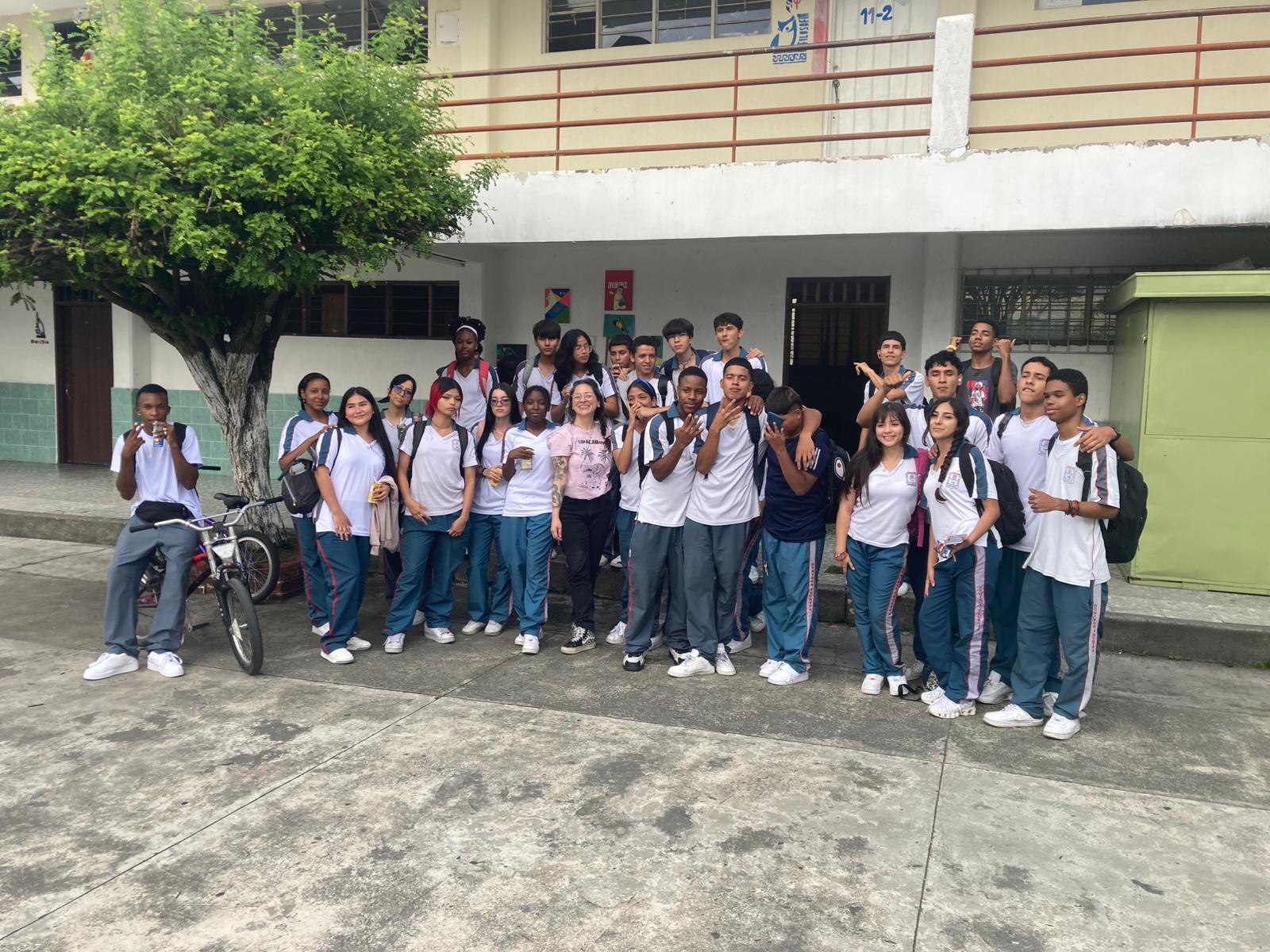
In conversation with Project Officer, Agustín Searle Vial, diaspora professional María Fernanda Castaño, who co-leads the D4D DynamoLAB project in Colombia, shares how her migration story, feminist perspective, and transnational work come together in an initiative that aims to train young women to become leaders in the energy transition.
Agustín Searle Vial: What motivated you to get involved in this project with Kunstrial and Dynamo in Colombia?
María Fernanda Castaño: My migration journey has been, is and will continue to be a defining and cross-cutting element in my personal, academic and professional life.
I was born and raised in Colombia, in three different cities: Girardot, Cúcuta and Bogotá. In Bogotá, I studied Political Science, and later migrated to Europe to pursue a Master’s degree in International Migration and then another Master’s degree in Latin American Studies, with a focus on gender studies and queer theory. Currently, I am a PhD student in Gender Studies and Equality Policies at the University of Valencia, where I am conducting multi-sited research on experiences of inequality during undocumented migration among women and individuals at the southern borders of Spain and Mexico.
My main motivation to join the association was Kunstrial’s transnational approach to international exchange in art and culture. Regarding Dynamo, the long-standing friendship we have built over time, together with our shared commitment to alternative forms of education beyond major cities, were fundamental reasons for becoming involved in this project.
ASV: This project combines energy transition, solar energy and the empowerment of women and youth. Why is it so important to talk about gender when we talk about energy and sustainability?
MFC: It is important to become aware that we are part of our environments and ecosystems, and to break the myth that these are merely the stage where our lives unfold. This awareness generates processes of empowerment that allow us to actively participate in building communities and imagining new, more supportive worlds.
At the same time, these processes of awareness must include the recognition of the structural, deep and historical inequalities that shape the multidimensional life experiences of women and diverse communities (including BIPOC and LGBTQ+ individuals).
ASV: As a Colombian woman who is part of the diaspora, what does it mean to you to contribute your experience and knowledge to a project that aims to create opportunities for women and young people in rural communities?
MFC: For me, it is a privilege to participate in this project and, above all, to have the opportunity to work with young people who live outside the country’s major urban centres. It is a privilege to be in a space where I can share my migration story and my academic background. By doing so, I feel that I am helping to build bridges between territories, experiences and forms of knowledge that would otherwise remain disconnected.
ASV: Within the project, you will be facilitating training sessions with a gender perspective. What key topics would you like to address with participants, and what changes do you hope to see in how women’s roles in the energy sector are perceived?
MFC: The first module is called “Workshop on sustainable strategic communication (feel–think, Express, plan, act)”, which emphasises sustainable ways of communicating and relating to others. When we work from a feel–think perspective, we do so from positions and standpoints that allow us to intervene structurally in the co-creation of participatory spaces for women, diverse communities and men with a gender perspective.
The second module is called “Gender and access to energy”, where we explore how normative gender roles produce deep inequalities in access to education, working conditions, community participation, care work and access to energy. We address this from an intersectional perspective, not only to identify and analyse our contexts, but also to design participatory processes that drive concrete changes in these unequal structures.
I hope that participants will recognise women and diverse groups as key actors in the energy transition, not only as beneficiaries, and question gender stereotypes that limit their participation in technical, community and decision-making spaces. I also hope that they strengthen their confidence and agency to actively engage in energy projects within their communities and incorporate perspectives of care, sustainability, and social justice into their work and leadership.
ASV: Looking ahead, what impact would you like this project to have?
MFC: I experience this work as a process of both individual and collective exchange, where working together strengthens our confidence to discover our roles and participate from what each person can contribute.
I hope that this project contributes to helping young women participants feel like active agents of change in their communities, always highlighting the best of our shared capacities.