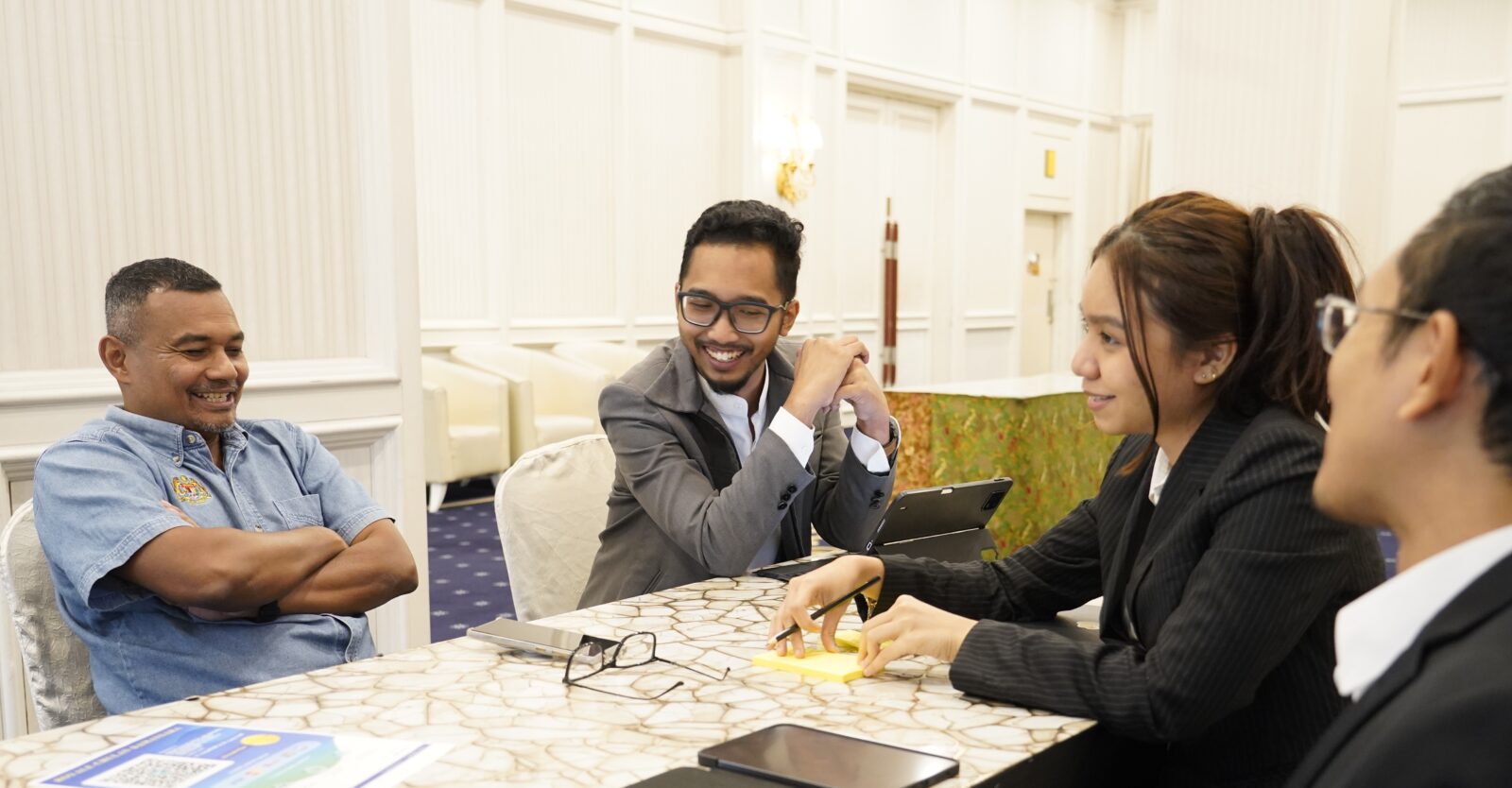
Learning from peers offers an opportunity for inspiration as well as self-reflection. This was certainly the case for the participants in the recent peer exchange in Kuala Lumpur as part of the project to support Malaysia’s TalentCorp in their work to engage diaspora talent and encourage skills transfer. Charlotte Griffiths reflects on what this exchange could mean for diaspora engagement in the region.
In 2022, EUDiF hosted a thematic meeting with countries from Asia and the Pacific with a focus on labour migration. Back then diaspora engagement and labour migration were intrinsically linked but discussed explicitly very little. This was illustrated by the fact that many countries approached diaspora engagement from the perspective of safe labour migration laws and rights, and reintegration of returning labour migrants, but few had dedicated policies, institutions or programmes for diaspora. In addition, many reported “brain drain” as a significant challenge and sought to motivate highly skilled expatriates to return but did little to engage those who sought to remain overseas.
Whilst this is still true today, the current Capacity Development Lab project to support Malaysia’s TalentCorp is showing that the conversation is expanding, both in linking the two areas of migration and shifting the narrative from “drain” to “circulation.” And with Malaysia currently the chair of ASEAN with the theme of “inclusivity and sustainability”, the time has never been better for exploring what diaspora engagement in Asia could look like in the coming years.
A regional conversation starter
In the last week of August, we brought six countries together to share lessons learned on diaspora engagement with a specific focus on talent attraction and skills transfer.
India, Indonesia, Malaysia, the Philippines, and Thailand shared experiences from across Southern and Southeastern Asia, whilst special guest Armenia joined to bring experience from Eastern Europe and Central Asia, complemented by experiences EUDiF brought from its partnerships around the world since 2019.
Peer exchange is one of the most useful tools in capacity development. It offers a chance for mutual learning and critical reflection on practices, as well as creating space for creative thinking on shared strategies and resources. Given the predominance of labour migration in Asia, instigating a peer exchange amongst near neighbours on the relatively nascent topic of diaspora offers an exciting opportunity for innovation and collaboration. Collective exploration of diaspora is something which other regions have benefitted from, why not Asia?
The combination of countries at this most recent exchange demonstrated the value of mixing countries with a long history of diaspora engagement – such as Armenia, India and the Philippines – with those seeking to diversify their approach. It meant a rich mix of experience and curiosity for experimentation which informed conversations on classic topics and newer developments.
Continuum thinking
One of the most provocative reflections was over the historical separation of labour migration from diaspora engagement, something which many countries with significant labour migration contend with. Whilst the proliferation of policies and institutions focused on labour migration is understandable in the region, it poses a challenge for identifying the most suitable actors to coordinate diaspora engagement (wherein diaspora as considered as migrants and their descendants who are settled overseas long-term).
The Philippines – a country with significant support systems in place for labour migrants as well as a multitude of options for diaspora engagement – presents a strong example of how these can be coordinated in a complementary manner. Distinct institutions provide specific services and lead outreach by type, but with strong interinstitutional coordination and overarching “one team” attitude.
Through this portfolio approach we can also see migration understood as a continuum along which an individual may move, even multiple times. Recognising this and developing an enabling environment that avoids siloing labour migration from diaspora has strong potential for countries which are seeking to maximise the development potential of all forms of migration.
Inclusive services
Within the idea a migrant-diaspora continuum is the need to ensure that services reflect both the evolving priorities of the country and the evolving interests of the diaspora.
In Asia this is best seen in the shift from engaging the diaspora to address “brain drain” through return to a more holistic approach that acknowledges that not all diasporans will return, but they may still wish to support the country.
In this, TalentCorp’s expanding approach to the Malaysian diaspora is a strong example of how an institution can engage its diaspora in a manner that is welcoming and open, offering support packages to those who wish to return (TalentCorp’s original goal) and complementing these with diaspora community building and an open-door policy to other ideas. This inclusive approach has led to very tangible partnerships between Malaysia and its settled diaspora and created a reputation for TalentCorp as being respectful of the diaspora’s diverse potential and engagement preferences.
“Do you really need a diaspora engagement policy?”
A recurrent question with no clear answer. Although EUDiF has identified 35 diaspora engagement policies around the world (and more in draft), at the peer exchange only one country’s work is guided by a dedicated policy, Armenia. None of the participating Asian countries has a policy – in fact only four in the region do: Afghanistan, Bangladesh, Nepal and Timor-Leste. Moreover, a number of pioneering countries in diaspora engagement have no dedicated policy, including Mexico, India, the Philippines…
Considering this and all the exchange participants are active in diaspora engagement without a policy, is it really necessary to have one? One suggestion from the discussions: A dedicated institution can provide the strategic direction and demonstrate the political buy-in necessary for coordinated diaspora engagement without the need for a policy.
With diaspora engagement a lower priority across the region than other migration dimensions, most existing institutions are dedicated to labour migration. Could the introduction of continuum thinking to such institutions offer an institutional framework for diaspora engagement without the need for a policy? Food for thought.
Continuing the conversation
With the proverbial ice broken on diaspora engagement in Asia, and practices new and established explored, the peer exchange participants return to their respective institutions with resources, inspiration and questions – for themselves and each other. Similarly, the EUDiF team has homework to ensure these big questions go further.
Through the continuing project with TalentCorp and our upcoming work with other institutions, we hope to shed light on how continuum thinking can be applied to create a sustainable and inclusive diaspora engagement funnel, and – of course – the added-value of diaspora-engagement policies, or indeed the alternatives.
Curious to learn more about the participating peers’ diaspora engagement? See the 2024 update of the country factsheets: Armenia, India, Indonesia, Malaysia, the Philippines, Thailand.
EUDiF thanks TalentCorp and the Government of Malaysia for the warm welcome to Kuala Lumpur, and the participants from the countries mentioned above as well as the Indonesian Professionals Association and the EU Delegation to Malaysia for their active engagement in the peer exchange.