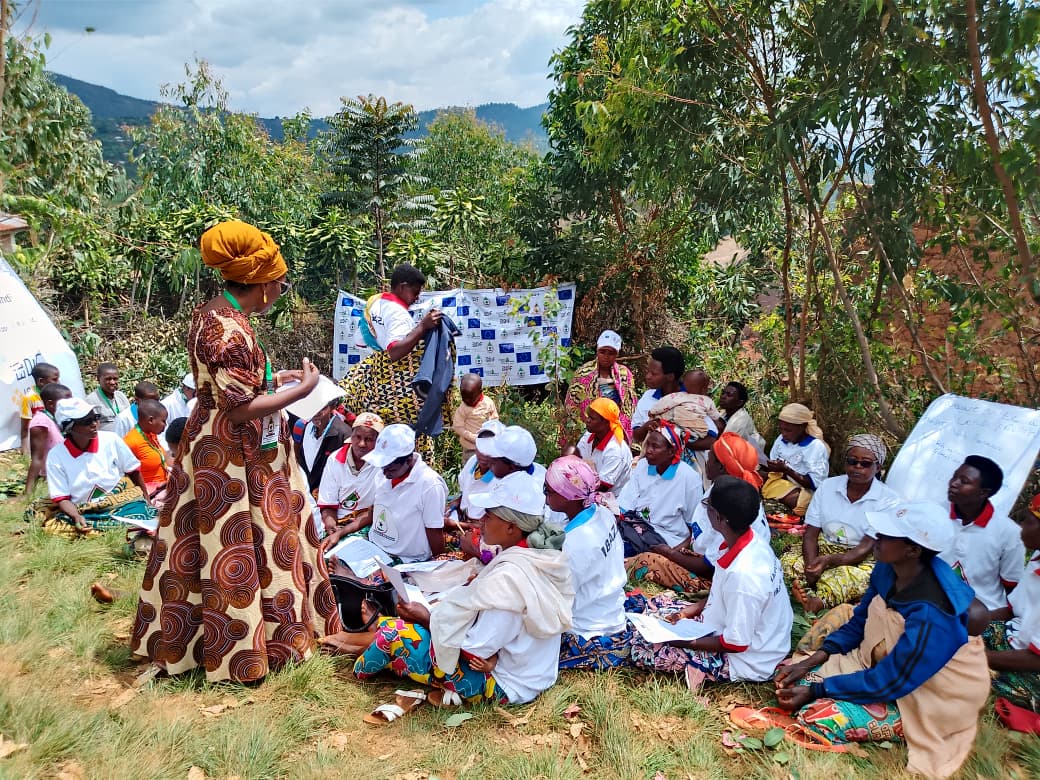
In this spotlight Jean Claude, Project Lead at Stichting Microprojects, speaks about how the D4D project “Tackling maternal mortality to reduce orphanhood in Burundi” is strengthening prenatal healthcare for women in rural Burundi.
In the Bururi province of Burundi, an ultrasound no longer means a long journey or an uncertain referral. In three rural hospitals (CONDI, Bururi and Nyagihotora), prenatal diagnostics are now available closer to home and are supported by trained staff. This shift is the result of a structured effort to strengthen maternal health services, driven by the Burundian diaspora and anchored in local health systems.
To better understand how this work came together and what drives the people behind it, Diaspora Relations Lead Hala Tarabay sat down with Jean-Claude, Project Lead at Stichting Microprojects, to discuss the project, the mobilisation of the Burundian diaspora and the changes already visible on the ground.
Hala: Jean Claude, what motivates you personally to lead and mobilise the diaspora in this project?
Jean Claude: I am the sixth child in a family of ten, of whom eight survived to grow up. Two of my younger siblings died very young. These losses, combined with the fact that I was born in the bush while my mother was fleeing the violence of 1973, shaped in me a very sharp awareness of human vulnerability.
My upbringing in the Xaverian movement, deeply rooted in the ideal of charity “always and everywhere”, reinforced this sense of responsibility towards the most fragile. Meanwhile, my professional journey across several universities in Africa and Europe showed me that concrete solutions do exist. In short, it is the articulation between empathy, expertise, continuous learning, committed transnational networks and access to human and financial resources that allows a vision to become concrete action.
H: The Burundian diaspora network supporting the project is organised into specialised subcommittees. How were these subcommittees created, how do they function, and how do they contribute to the project’s implementation?
J C: The Burundian diaspora subcommittees were created through a simple participatory process. After the election of a President and Vice-President, a small bureau formed the Steering Committee. This body then structured technical commissions — health, education, agriculture, infrastructure, sport and culture — appointing for each a President and Vice-President responsible for recruiting members according to their expertise.
The commissions operate with a high level of autonomy: they plan, budget and monitor their projects, while the Executive Committee validates proposals before they are presented to the General Assembly. Microprojects provides the legal framework and financial management, while resource persons from the provincial administration and experts based in Bujumbura strengthen local anchoring.
This hybrid organisation — centralised governance, decentralised action — guarantees efficiency, flexibility and strong local roots.
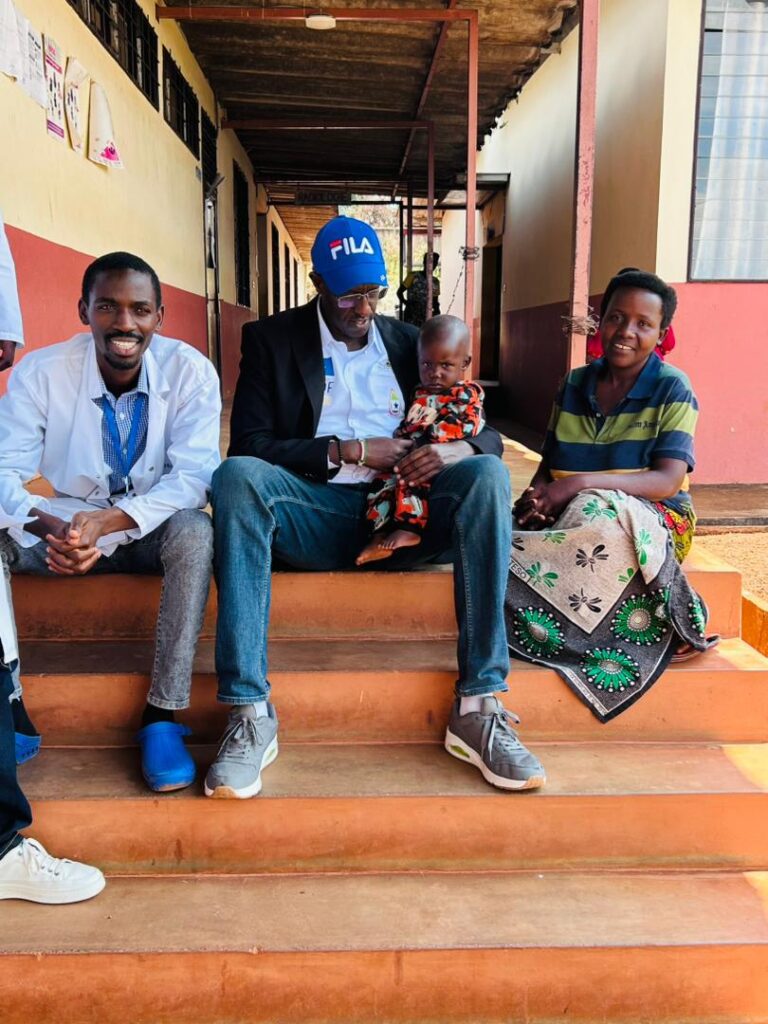
H: The project has already delivered several results: ultrasound machines are installed, doctors and midwives have been trained, and awareness campaigns have reached hundreds of women and girls. From your perspective, what are the most significant impacts so far?
J C: When I think about the impact of this project, I first smile, remembering a woman I met in Condi who told me: “At last, I no longer have to walk farther than my own husband!”.
Before our intervention, a pregnant woman in Bururi sometimes had to walk dozens of kilometres just to hope for an ultrasound. Midwives, devoted but without tools, had never seen the foetus they were monitoring. And too often, what could have been detected early became a tragedy.
Today, thanks to the joint action of the diaspora, local authorities and committed partners, three rural hospitals have functional ultrasound machines. Nine professionals have been trained in obstetric imaging. Hundreds of women and girls now understand warning signs, the “four delays” and the “four too muches”. Antenatal consultations are increasing, unnecessary referrals are decreasing, and women find safety close to home.
We see midwives proud to master a tool that changes lives. We see doctors able to make clear diagnoses. And within families, we see renewed hope, dignity restored and a new trust in health structures.
There is also a quieter but profound dimension: the diaspora awakening. We take part in this project as if we were protecting our own mothers, sisters and cousins. Because in a way that is exactly what we are doing.
H: During your awareness campaigns, you engaged with a diverse group of women and girls. Have you observed early shifts in how they perceive prenatal care or access health services?
J C: Girls understood the “four delays” faster than I ever learned my multiplication tables at school, and one of them came back the very next week with her sister for a consultation. Families are beginning to adjust their perception of risk. Even religious leaders, who used to say “a child is a gift from God” now recognise that a gift deserves at least a minimum of protection.
These results did not emerge automatically. They are the combined fruit of God’s grace, as communities recognise and the hard work of local teams: doctors, midwives and volunteers who travel by motorbike or even on foot across Burundi’s steep hills to reach rural families.
H: Looking ahead, how can collaboration between diaspora actors, local partners and health institutions evolve to ensure continued progress in maternal healthcare?
I ask myself what we truly mean by lasting progress in maternal health. My intuition points towards a deep social transformation, supported by solidarity networks and technical investments that allow women to access safe care embedded in their community. As Dr. Olivier, the project’s radiologist, put it: “Lasting progress is when women continue to access quality prenatal and postnatal care even if the diaspora is no longer there.”
For these advances to become truly sustainable, three elements must be strengthened: the working conditions of local teams; a permanent diaspora secretariat to ensure continuous coordination; and an organisational framework capable of maintaining service quality despite high demand.
As we say in Burundi: “Even a motivated goat cannot climb a mountain without a good path.” Motivation matters, but without structure and support it fades. Our ambition is to build that path so that today’s progress becomes tomorrow’s normality.