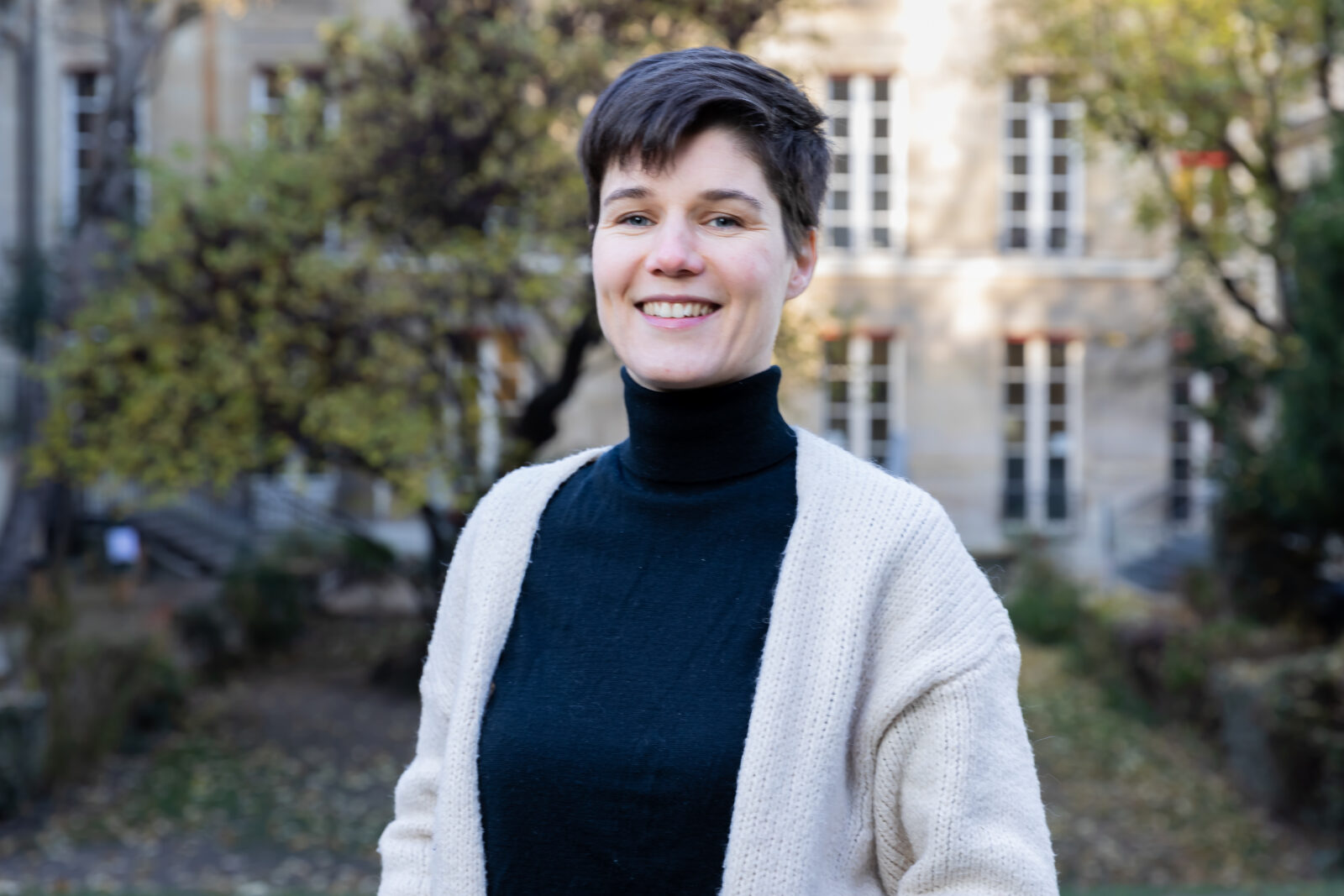
In this interview, Dr. Claire Vincent-Mory speaks with Hala Tarabay, Diaspora Relations Lead and intern Alya Honarpisheh about her research on diaspora representation in Europe and why it matters for democratic participation.
As part of her Marie Skłodowska-Curie Postdoctoral Fellowship at the Centre for Ethnic and Migration Studies (CEDEM) of the University of Liège, Dr. Claire Vincent-Mory is leading DIASPOREP-EU: Shaping diaspora representation in Europe, a project exploring how diaspora organisations contribute to political representation at the European institutions level. Through exchanges with EUDiF, the project benefits from practical insights about diaspora actors engaged in European and global development initiatives.
At EUDiF, we value collaborations in all their forms, from research partnerships to knowledge sharing, and this interview marks another opportunity to learn from and contribute to the growing field of knowledge on diaspora representation.
Claire, thank you for joining us for this interview. Could you briefly introduce yourself and tell us what brought you to research diaspora representation?
During my first professional experience, I was not planning on doing a PhD or an academic career. My interest in the work of migrant and diaspora organisations began when I joined Migration et Développement for an internship, where I saw first-hand how meaningful and strategic transnational engagement could be.
After completing my master’s degree, this interest naturally evolved as I worked with COSIM, the first regional coordination of diaspora organisations in Lyon, France, where I became its first coordinator. The COSIM was the first step in FORIM’s localisation strategy at the time. The goal was to work with diaspora organisations outside Paris and support them in finding funding, designing and implementing projects, and in building partnerships with local authorities. It was during this experience that two key challenges became increasingly visible to me:
- The heterogeneity of diaspora organisations and the resulting questions of how they could work together, structure themselves, and distribute leadership.
- A lack of mutual knowledge with the other categories of actors engaged in development cooperation. For instance, many local authorities were unaware of the scale, ambitions and skills within migrant associations.
These recurring challenges made me reflect more deeply on why building relationships and cooperation in this field was often so difficult. This questioning ultimately pushed me toward academia. Over time, my practical observations transformed into more scientific questions, particularly: how do we make room for actors who often remain “invisible”?
During my PhD, I developed research grounded in political sociology, focusing on the recognition of migrant organisations within the multilevel governance of development cooperation. This work opened the door to examining political participation and representation among minority communities, helping me identify broader patterns of inclusion and exclusion across different groups, besides ethnic and migrant minorities.
In the end, I have always loved reading and asking questions, so research became the space where these interests could come together naturally.
Your project focuses on non-electoral political representation. Could you explain what that means in practice, and how it differs from traditional forms of representation?
When we think about political representation, we usually imagine elected officials such as mayors, local councillors, members of parliament or congress – people chosen through democratic elections to take part in decision-making processes and shape public policies on behalf of voters. That is what we also sometimes call “formal” representation, although I am not a big fan of the term.
Non-electoral representation, by contrast, refers to the representational practices carried out by civil society actors who speak or act on behalf of a community without being politically elected for that. Civil society organisations, including diaspora organisations, play an increasingly important role in democratic life, and acknowledging this reality requires expanding our understanding of who represents whom, and how.
These non-electoral forms of representation fulfil multiple democratic roles, including:
- Providing social support and stepping in where states or local authorities fall short;
- Building visibility and audibility for migrant communities through “representatives acts” such as advocacy and awareness raising;
- Framing collective identities, a crucial step for migrant communities seeking political recognition despite their internal diversity;
- Building platforms and umbrella organisations, a new and growing phenomenon allowing diverse communities to speak collectively.
The rise of non-electoral representation coincides with a decline in trust in traditional, elected representation. People are voting less, and democracies worldwide show concerning backsliding trends, which can bring some to argue that democracy is weakening. Yet, when we pay attention to how people organise, mobilise and represent themselves outside electoral channels, we see that democratic life remains very active and meaningful.
This is why it is so important to understand and document these practices today, especially as migrant and diaspora communities are increasingly confronted with delegitimisation and shrinking civic spaces.
You are collaborating with EUDiF to analyse and map diaspora organisations in Europe. What added value does this partnership bring to your research?
For research on diaspora engagement to be meaningful, it needs to speak to practitioners: The organisations and actors who are directly shaping the field. Academic work often remains within academic circles, and if only my peers read my findings, the impact remains limited.
This is where collaborating with EUDiF makes a real difference. Working closely with a team that regularly engages with diaspora organisations gives me a clearer sense of the questions they ask, the challenges they face, and the type of evidence that resonates with them. This exchange helps me better understand which findings matter most and how to present them in ways that are useful and accessible.
In addition, EUDiF has developed strong expertise in translating complex information into formats that can reach a wide audience through the website, infographics, and systematic tools such as the global mapping or the typologies of public institutions. Learning from this approach is extremely valuable for a researcher trained in academic writing.
Finally, EUDiF has been collecting a large amount of data that a single researcher could not obtain alone. Having access to such a rich dataset opens new perspectives for my work and strengthens the empirical foundation of the project.
What outcomes do you hope DIASPOREP-EU will achieve by 2027?
Academically, I hope to publish my findings and contribute to discussions on diaspora representation as non-electoral actors through several outputs planned over the next two years including a factsheet summarising early results, an accessible web presentation of the findings, and a policy brief on the legitimacy of diaspora non-electoral representation at the European level. These formats, especially the ones developed with EUDiF’s web library, will allow the research to reach audiences beyond academia.
There is a strong narrative about including diasporas in EU institutions, but in practice, it is still very rare to see diaspora representatives genuinely involved in policy design and decision-making. Often, diaspora organisations are invited to share recommendations, but real participation goes much further. One of the project’s goals is therefore to clarify under what conditions diaspora civil society actors can meaningfully influence policy and how their representative claims can be better understood and supported.
In parallel, the project will produce an interview corpus with diaspora leaders, contribute to EUDiF’s ongoing data work, and culminate in a final multi-stakeholder conference in 2027, which I am very excited to co-organise. This will be a moment to bring researchers, policymakers and diaspora organisations together to reflect on representation, participation and citizenship in Europe.
We are very excited to be accompanying you throughout this research journey. As a final question, what message would you share with diaspora organisations seeking to make their voices heard at the European level?
For now, I prefer not to give premature advice or assumptions, because I want to base my conclusions on solid evidence. At this stage, I cannot yet say with certainty what counts as a representative act, what is most effective, or what truly helps diaspora organisations make their voices heard in Europe. We are living in difficult times, marked by democratic backsliding and increasing questioning of diaspora contributions, which makes this even harder to navigate.
There is still no clear view on how EU institutions can or should give better seats to diaspora actors, and this lack of clarity is felt by diaspora leaders themselves. My aim is to provide an evidence-based answer by the end of my research, so that any recommendations I share will be grounded, rigorous, and useful for the organisations concerned.
Thank you, Claire, for sharing your insights with us.
Stay tuned as we continue to follow and share the progress of DIASPOREP-EU!