Diaspora youth intern Mary Otieno, challenges the assumption that people must choose between fully belonging to their country of residence or remaining connected to their country of origin and proposes that integration can be a foundation for diaspora engagement.
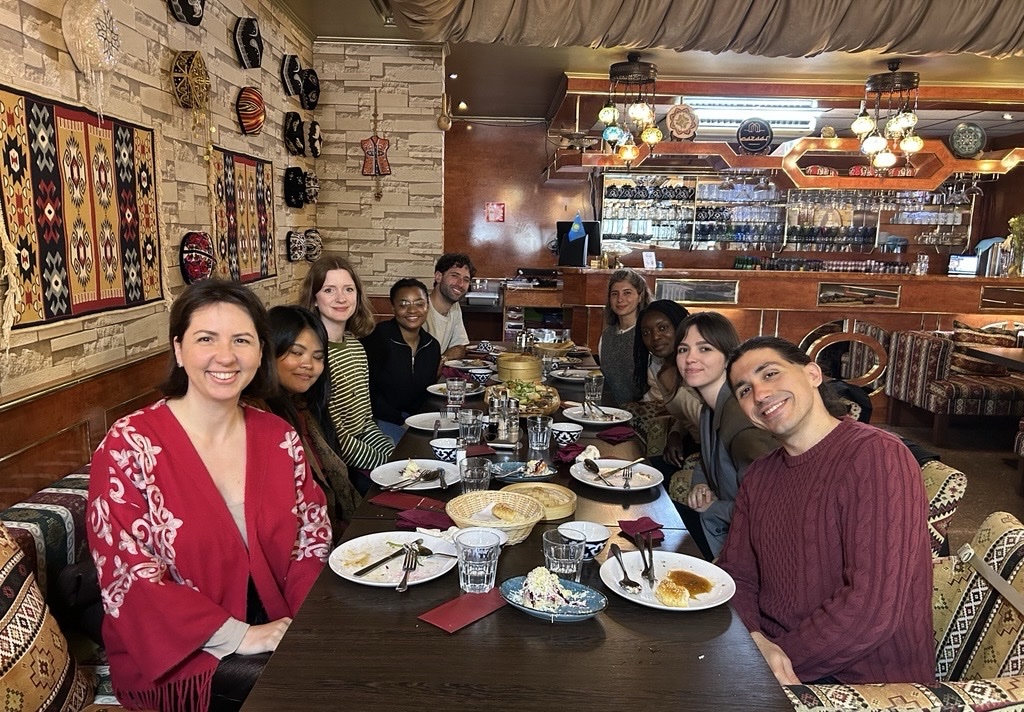
A few weeks ago, I found myself sitting around a table in Naples with friends from different parts of the world. Some of us had come to Italy to study, others had settled here years ago. Between cups of coffee and plates of food, conversations moved effortlessly from football and Italian bureaucracy to politics back home and childhood memories.
At one moment, someone joked that despite living thousands of kilometres away from our countries of origin, we somehow managed to recreate a little piece of home wherever we went.
Looking around the table, I realised that none of us seemed to be struggling to choose between one identity and another. We were not suspended between two worlds. Instead, we had quietly learned to inhabit both.
That evening stayed with me because it challenged an assumption I had encountered repeatedly in conversations about migration and integration: that migrants must eventually choose between fully belonging to their country of residence or remaining connected to their country of origin.
Yet this has never reflected my experience. Living in Italy has not made me any less Kenyan. If anything, distance has strengthened my appreciation for certain traditions, values and relationships that I once took for granted. At the same time, Italy has become much more than simply a place where I studied. It is where I have built friendships, discovered new perspectives and learned to navigate a very different society from the one in which I grew up.
Over time, I came to realise that integration does not necessarily mean assimilation. Rather, it can create space for multiple identities to coexist. For me, becoming more rooted in Italy has not required becoming less connected to Kenya. This understanding also resonates with the European Commission’s Action Plan on Integration and Inclusion 2021–2027, which describes integration as a two-way process involving both migrants and host societies.
How integration enables diaspora engagement
Working as a Diaspora Youth Intern at the European Union Global Diaspora Facility (EUDiF) encouraged me to understand these experiences through a broader policy lens. Before joining EUDiF, I often thought about integration and diaspora engagement as separate conversations: one focused on inclusion in the country of residence, and the other on maintaining connections with and contributing to the country of origin. Through my work, however, I have come to see that they are deeply connected.
Integration can strengthen the resources and capacities that diaspora members draw on when engaging across borders. The relationships people build, the economic stability they achieve, the professional experience they gain, and their participation in civic and institutional life can all strengthen their ability to contribute beyond the country in which they live.
This relationship is also reflected in research on diaspora-homeland relations. Sheffer argues that migrants’ relationships with their countries of origin are influenced by the ways in which they integrate socially, culturally, politically and economically in their countries of residence.
One way integration can strengthen diaspora engagement is through the networks and social connections people build. As diaspora members become embedded in their countries of residence, they develop networks with individuals, organisations and institutions. These relationships can become more than sources of belonging. They can also become channels through which information, partnerships and opportunities flow across borders. This reflects the broader importance that the Organisation for Economic Co-operation and Development (OECD) and European Union place on social participation and connections in understanding migrant integration. In this way, the social networks developed through integration can also become a resource for diaspora engagement.
But networks alone are not enough. Economic stability and professional experience provide another pathway through which integration can strengthen diaspora engagement. Economic security and professional experience can shape what diaspora members are able to contribute. Employment may create greater financial space to invest or support initiatives, while education and professional experience can generate knowledge, expertise and skills that travel across borders. This is particularly important because diaspora engagement extends well beyond remittances. IOM highlights entrepreneurship, skills and knowledge transfer alongside financial contributions as important ways in which migrants can contribute to development.
The same process extends into civic and institutional life. Participation in associations, community organisations and wider civic spaces can give diaspora members experience in organising, advocating and building partnerships, while also building the confidence to engage with institutions and participate in public life. At an organisational level, these experiences can strengthen the capacities through which diaspora engagement takes place. Diaspora organisations can build relationships with public institutions, civil society and development actors, creating opportunities for representation, cooperation and partnerships both where they live and across borders. The OECD and EU identify civic participation, alongside social and economic inclusion, as an important dimension of immigrant integration.
Taken together, these mechanisms help explain why diaspora contributions do not have to happen despite integration; they often happen because of it.
From integration to engagement in practice
This relationship can also be seen in practice. Health Up Togo-France, an organisation established by Togolese living in France, offers one example. Through its Étudiant Woezon initiative, the organisation supports Togolese students settling in France, including with accommodation, administrative procedures and employment. At the same time, its activities extend to Togo, where it contributes to health initiatives. The organisation illustrates how supporting integration in a country of residence can exist alongside continued engagement with the country of origin.
Institutional relationships can provide another pathway for diaspora engagement. Haut Conseil Représentatif des Congolais de l’Étranger (HCRCE), based in France, brings together and represents Congolese living abroad and serves as a link between diaspora associations and the Congolese authorities. Its work includes promoting diaspora investment in Congo, supporting international solidarity and development projects, and strengthening cooperation between diaspora communities and institutions. This shows how institutional recognition and representation can create a more structured role for diaspora organisations in contributing to their countries of origin.
Community as a form of integration
Some of the most profound lessons I learned about integration did not come from textbooks or policy discussions. They came from the women I met while volunteering with Weavers of Hope APS, an organisation that supports migrant women in rebuilding their lives in Italy. Listening to their stories, I was struck not only by their resilience but also by their determination to create a sense of belonging in a new country without severing their ties to home.
One of the initiatives I encountered through this experience was Cultures and Foods, an African cuisine restaurant created as part of Weavers of Hope APS’s efforts to support the women’s social and economic integration. The women received training and opportunities to work in the restaurant, allowing them to develop skills, participate in the local economy and build greater independence in Italy.
But the restaurant was more than a place of work; it also became a community space. People did not simply come there to eat. They came to celebrate birthdays, reconnect through familiar languages and music, and share memories of places and people they missed. Advice was exchanged, friendships deepened, and newcomers found support from those who had already navigated the challenges of starting over in a new country.
For a few hours, the distance separating people from home seemed a little smaller.
The restaurant eventually came to symbolise something much larger than cultural preservation. It showed me that community itself can be a form of integration. The same space that provided training and employment also created relationships, support and a sense of belonging.
It was only later, during my internship at EUDiF, that I encountered Alya Honarpisheh’s discussion of “third spaces”. Her reflections on how informal community spaces can enable diaspora members to connect, develop a sense of belonging and build collective agency gave me a new way of understanding what I had witnessed at the restaurant. Looking back through this lens, I began to see the restaurant differently: it was not simply a place where people maintained connections to home; it was also a space from which they could build relationships and participate more confidently in their new surroundings.
Building home in more than one place
Looking back at that conversation in Naples, I now understand more clearly why it stayed with me. Beneath that exchange was an assumption that belonging in one place weakens our connection to another.
My experiences have shown me something different. Becoming more rooted in the society where we live does not require leaving behind our connections to where we come from. We can participate fully in our countries of residence while remaining connected to and contributing to our countries of origin.
Perhaps building home in more than one place is not about choosing where we belong. It is about recognising that putting down roots in one place does not mean pulling them up somewhere else.
Integration, then, is not the opposite of diaspora engagement. It can be one of its strongest foundations.