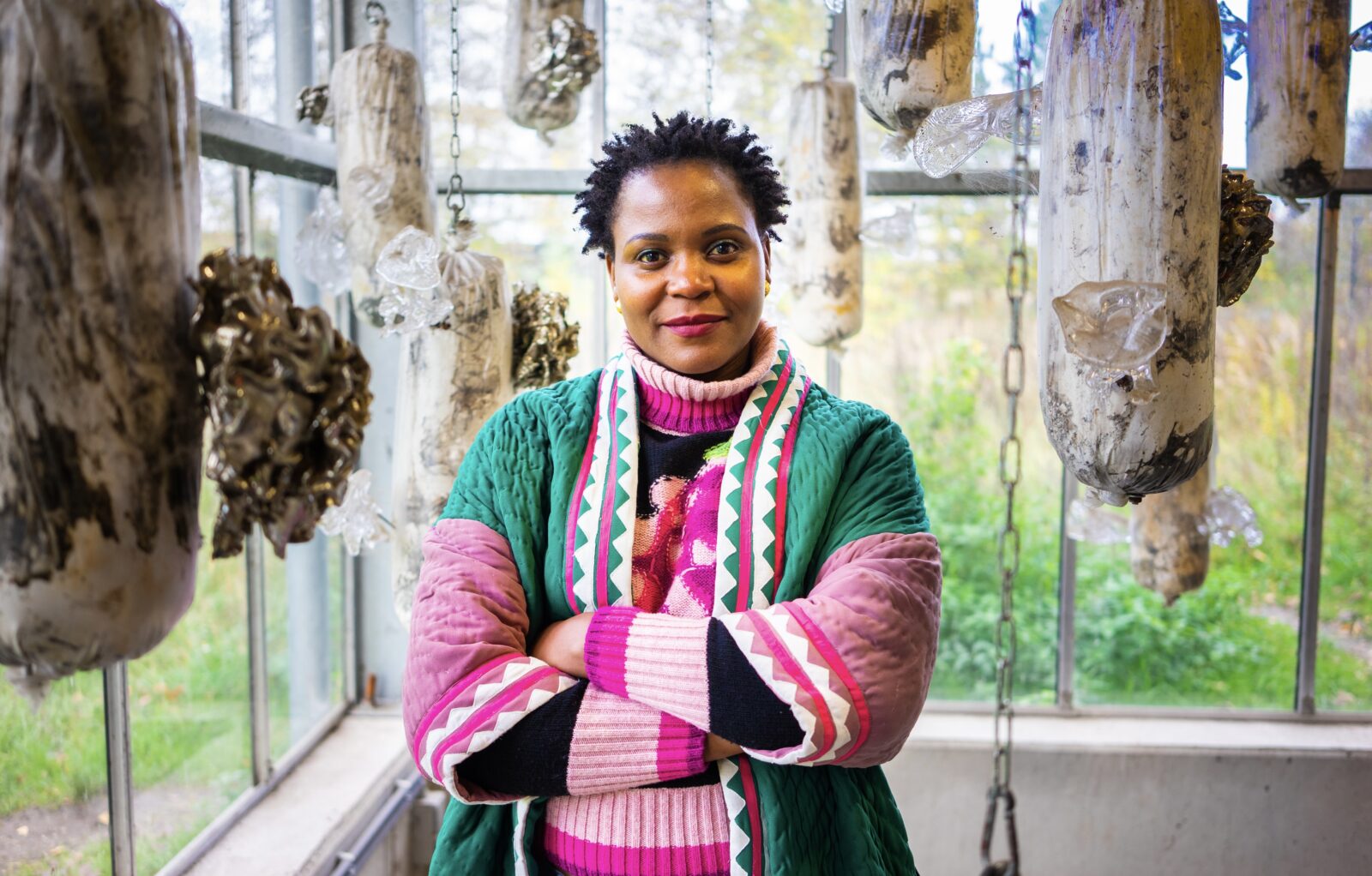
Photo credit: © Loic Delvaulx
In this spotlight, Chido Govera, founder of the Future of Hope Foundation and its Belgian chapter, the Future of Hope vzw, speaks about the D4D project “Zim Mushroom Spawn Solutions”, which empowers mushroom farmers in Zimbabwe through local mother spawn production. In dialogue with Liza Bezvershenko, Junior Project Officer, they reflect on diaspora identity, gender and innovation.
Liza Bezvershenko: Chido, both of your organisations focus on improving livelihoods through mushroom farming. Why did you choose mushrooms as your focus?
Chido Govera: My focus on mushroom farming is deeply inspired by my personal experiences growing up in a rural village, becoming an orphan when I was seven years old and being the head of the household at that young age. Much of my childhood was spent doing odd jobs just to try to put food on the table.
There was, however, one particular time of year that was different: mushroom season. During that period, my very old grandmother would take me into the forest to forage for mushrooms. She knew mushrooms incredibly well, and those moments in the forest with her were among the happiest experiences of my childhood.
My life changed dramatically when I stopped school at the age of nine. By the age of ten, I was expected to be married off, but I could not bear the thought of leaving the people I was caring for in my household to become a child bride. When I refused the marriage, it meant I remained out of school, struggling to survive with very little support. Then, at the age of eleven, I was introduced to mushroom farming.
I had never heard of mushroom farming before, but because of my experience foraging, I was immediately curious. The idea that mushrooms, which I had only harvested once a year during the rainy season, could suddenly be cultivated felt like magic to me. It reminded me of the stories my grandmother used to tell me. She taught me how to harvest respectfully and honour the forest so that it would continue to provide. Back then, she spoke of the “gods of the forest.” Standing in a university laboratory years later, I thought: my grandmother already taught me this — just through a different storyline, different characters. It was a different way of communicating science.
I fell deeply in love with mushrooms. I returned to the university at the age of twelve to learn more and worked in a university laboratory until I was sixteen, then went back to school. I wanted to learn more and, eventually, share it with as many people as possible. Around 2013, I founded the Future of Hope Foundation to use mushrooms to inspire hope, because they showed me how waste could be transformed into food, nutrition and income, especially for vulnerable households.
LB: What is the core problem the D4D project Zim Mushroom Spawn Solutions aims to solve?
CG: In Zimbabwe, we already have a strong culture of eating mushrooms, and now also of cultivating them. One of the lessons I learned from working in the field is that while mushroom farming is growing well, there is still a big challenge around mushroom spawn, which is the seed. The availability and quality of spawn in Zimbabwe is still very low. There is growing demand, but many farmers face contamination and poor yields. The training in mushroom spawn production came from realizing that there were very few spawn producers, many of them self-taught, working in isolation. Everyone has their own little secrets and methods and there’s no shared platform to update knowledge, to learn together or to improve quality.
Through this project, we were able, for the first time, to bring together people working on spawn production in Zimbabwe including researchers and regulators who authorize spawn imports. We also connected with a Belgian company that produces mushroom spawn and is open to teaching.
It’s about exploring the same idea that shaped my life: moving from waste to value. From feeling like “I’m just one small person, what can I do?” to realizing, “I can do something.” Growing your own food is also a way of connecting with yourself and the world around you.
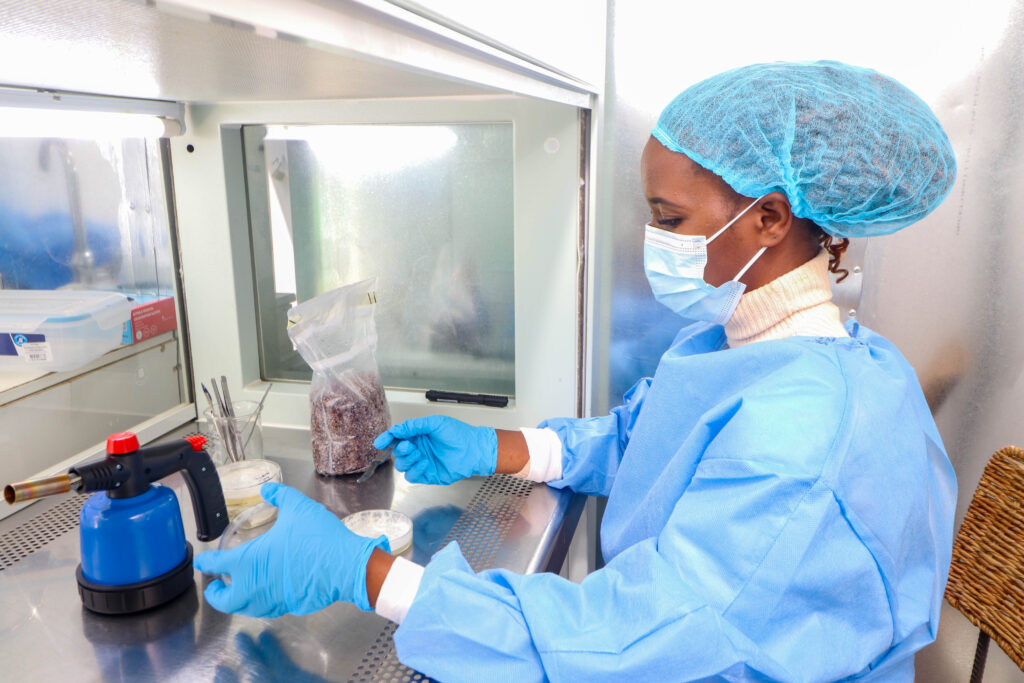
LB: A big part of the project is the training on mushroom spawn farming in Zimbabwe, which largely focused on women and young girls. Could you tell us more about that?
CG: We know that the problems we are trying to solve, especially livelihoods, are mostly carried by women and girls. This is also why, when I was young, I immediately had to take responsibility for my family. It’s not entirely fair that it plays out like that, but it is the reality of life. Women carry the duty of care. Because of this, women spend the most time with children and they are confronted with the responsibilities.
That is why we want to place women at the centre of this work — to make survival a little easier. When you look at why many women do not reach their full potential, it’s often because they are carrying the responsibility for everyone’s survival around them. And when that is always difficult, it makes the situation worse — not just for women, but for the whole world.
Most of the excitement is coming from young people. Some of them worked with us before, others were students who joined us during their university projects. One of them said, “Now I do my mushroom spawn production like someone who went to a private school.” That made me very proud. They are already sharing photos, testing the spawn, collecting feedback and helping us improve quality by seeing how it performs under different conditions.
LB: How do you see the future of mushroom farming in Africa?
CG: I think mushrooms — and the Fungi Kingdom in general — hold a lot of opportunities that are already being explored in many parts of the world today.
When we look at what we have done so far in promoting mushroom cultivation in Zimbabwe, we feel that we’ve created a platform where these innovative ideas can also be explored. For us, the future lies in guiding the production of mushroom spawn — the seed. Once we can improve that part, we can open many more opportunities to explore different applications.
Another important part of the future is conservation. By producing our own spawn, we can reduce pressure on wild mushrooms, which are disappearing quickly. We are currently waiting for the finalization of a project where we want to document traditional knowledge — like the knowledge my grandmother shared with me as a child.
We want to preserve these stories and practices. There are many grandmothers with similar wisdom that can contribute to protecting both biological and cultural diversity, in Zimbabwe and globally.
LB: When you became part of the diaspora, what kept you coming back to Zimbabwe?
CG: Well, that’s where my roots are. This is the space where my character was built. This is the place where I defined my life purpose.
Keeping that connection is important to me personally, but I also think it’s the gift I bring into the world. I show up in the world as a Zimbabwean girl with the experiences that I have. And I think we need to share that, just as much as we need to learn from others.
I also know that through my work I’m creating real opportunities for people who need them there. We lost many good people who went elsewhere just to find a livelihood because there were not enough opportunities. I want to clarify that people leaving is not always a bad thing if what we learn from being here is also brought back home.
So, for me, being part of the diaspora is not about leaving — it’s about building bridges. It’s about North–South cooperation, staying rooted while remaining open to the world, and continuing to invest in our countries and our region, no matter where we are physically based.
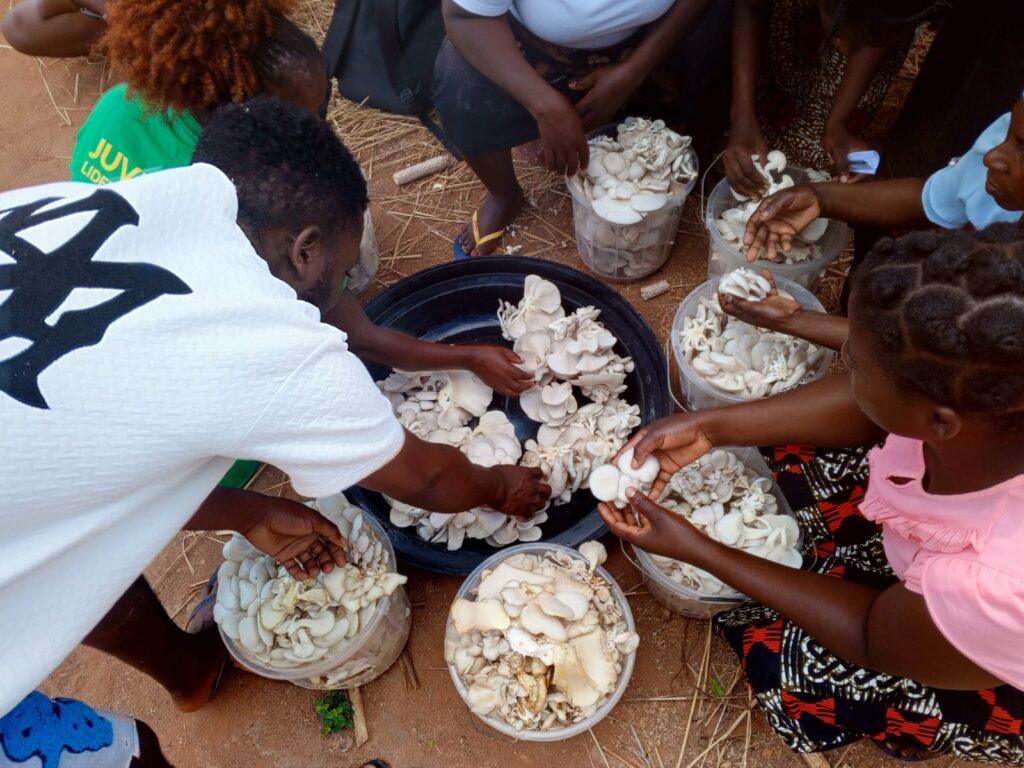
LB: Do you have a message for people in the diaspora who want to contribute but do not know where to start?
CG: I think there is a lot we can do from the diaspora. Sharing technical expertise with communities back home can have huge value. It doesn’t always require money. In my own life, one skill changed everything.
We have many young people back home who think about leaving. But by sharing skills and knowledge, we can help them create opportunities where they are, maybe even new industries. Mentoring someone, talking to them, showing them what’s possible — opportunities can be created anywhere.
LB: What does this project mean to you personally?
CG: Hope, connection, and community. For me, it represents a transition — a new way of continuing my work with my country while living elsewhere. It shows me how to move forward. It connects me to parts of my country that I always wanted to work with more deeply. Now I can do that in a different way.