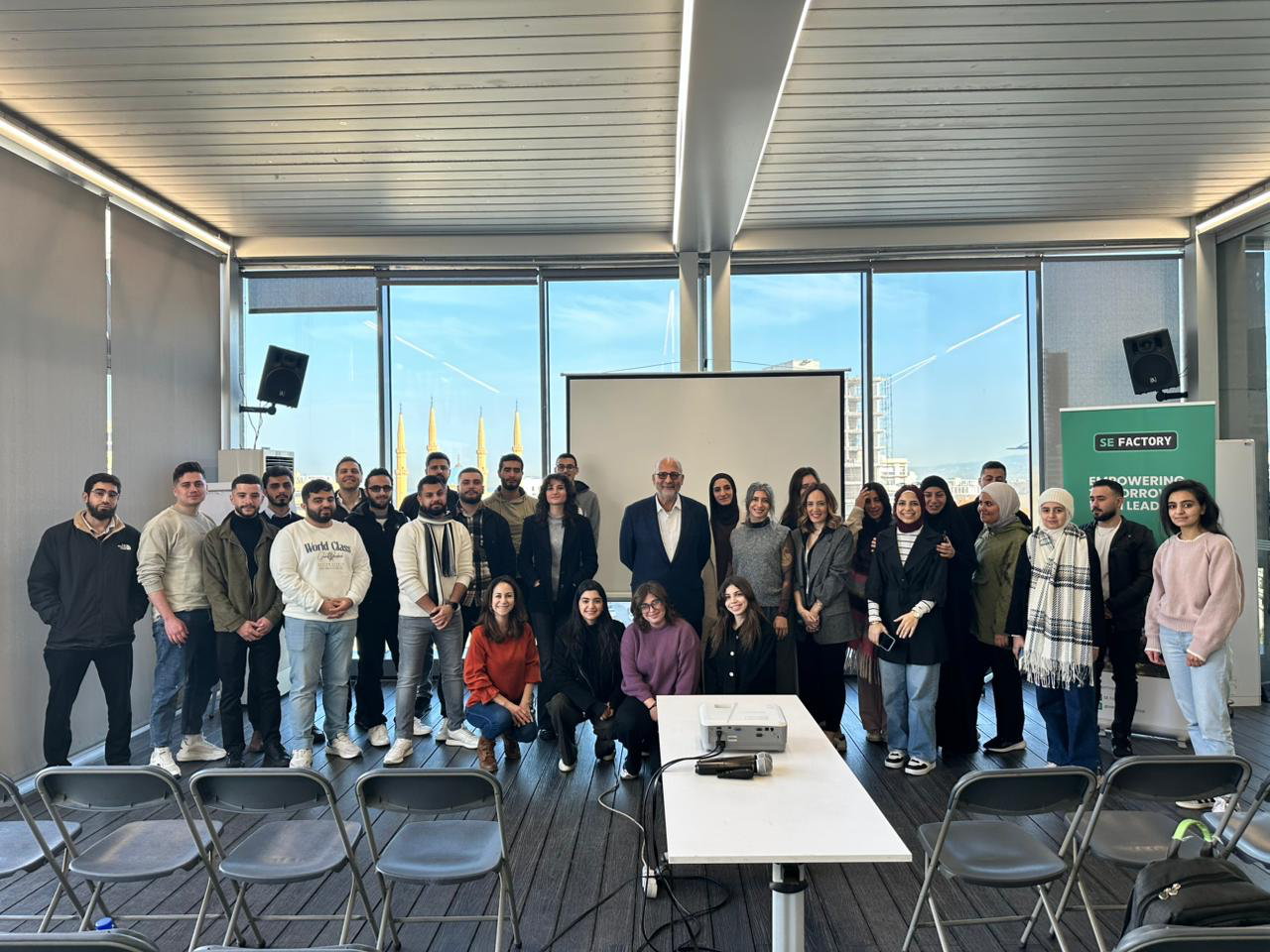
As the project “Vulnerable youth in Beirut: Improving their digital skills for a sustainable future” completes the first phase of its training programme, EUDiF takes a closer look at how Alissar’s early implementation is translating training into concrete employability pathways for young people in Beirut.
Project partners
Between October and December 2025, Alissar, one of eleven recipients of the Diaspora 4 Development (D4D) Grants, launched the first phase of its youth-focused digital training programme. The project is implemented in close partnership with SE Factory, a leading Lebanese coding and employability centre, and Mode 83, which brings international expertise in digital education and curriculum design from France.
Together, the partners combine on-site technical training, peer-to-peer exchanges and diaspora engagement to ensure that learning content is aligned with both the realities of the Lebanese labour market and international digital standards. The diaspora plays a targeted role throughout the project contributing expertise, mentoring and industry exposure as a complement to locally anchored delivery.
Early achievements
The first months of implementation marked a significant milestone for Alissar. The SE Factory training curriculum was finalised through four structured peer-to-peer exchanges between Alissar, SE Factory and Mode 83, and a full blended learning programme combining online and in-person sessions was launched in Beirut in November 2025.
While the original target was 30 participants, 35 young people were enrolled, with 30 completing the full core training organised in three learning groups. Reflecting on the first days of training, Mustapha Elriz, Alissar’s President recalls the moment participants came together for the start of the learning track:
“In the dynamic setting of Beirut Digital District, nearly 30 students are coming together over two days to engage with leading experts in digitalisation and AI. These sessions offer valuable insights into emerging opportunities, associated risks, and the strategic perspectives shaping the future of the sector within the Lebanese ecosystem and context.” – Mustapha Elriz
By early January 2026, the core training, covering web development, AI integration and digital fundamentals is nearly complete. Importantly, learning outcomes were documented through a learner segmentation process, allowing tailored support paths while maintaining quality standards. Notably, six participants secured employment, marking early positive outcomes well before graduation.
Connecting training to the digital ecosystem
Beyond technical training, the project strongly prioritises exposure to employers and the digital ecosystem. In December and January, Alissar and SE Factory jointly mobilised a high-level portfolio of digital experts from Lebanon and in the diaspora through a three-day Industry & Tech Talks programme. The sessions brought together university professors, startup founders, CEOs of established high-tech companies, venture capital professionals, and senior AI practitioners from Lebanon and France.
Discussions addressed real-world applications of AI, digital transformation, entrepreneurship, investment in tech startups, and emerging career pathways, providing participants with direct access to a network of decision-makers and employers, and to practical insights into the digital job market.
What makes Alissar’s approach stand out?
Three elements distinguish Alissar’s approach at this early stage:
- Agile training aligned with market needs: Modules were co-designed with SE Factory and Mode 83 and continuously adjusted based on trainer and beneficiary feedback.
- Quality assurance through personalised pathways: Rather than a one-size-fits-all approach, learner progress is documented and segmented, allowing tailored support while ensuring that all beneficiaries meet minimum competency thresholds.
- Diaspora engagement with a clear function: Diaspora experts contribute through Tech Talks, online sessions and mentoring, strengthening the bridge between training, professional networks and real employment opportunities.
Looking ahead: From training to employability
The project is now entering its next phase. While the first part of the training is concluding, Mode 83 is finalising asynchronous and live online modules to be delivered, alongside a coaching phase (February–March 2026) focused on interview preparation and job placement support. As implementation continues, the partners remain focused on one central objective: ensuring that digital skills training leads to concrete, sustainable employment opportunities for vulnerable youth in Beirut.
By grounding innovation in local delivery and complementing it with diaspora expertise, Alissar is building a replicable model that connects training, employability and long-term capacity development. We look forward to following the next steps of this project and invite readers to follow Alissar’s activities through their social media channels: